Loading…
Loading…

MONTSAME
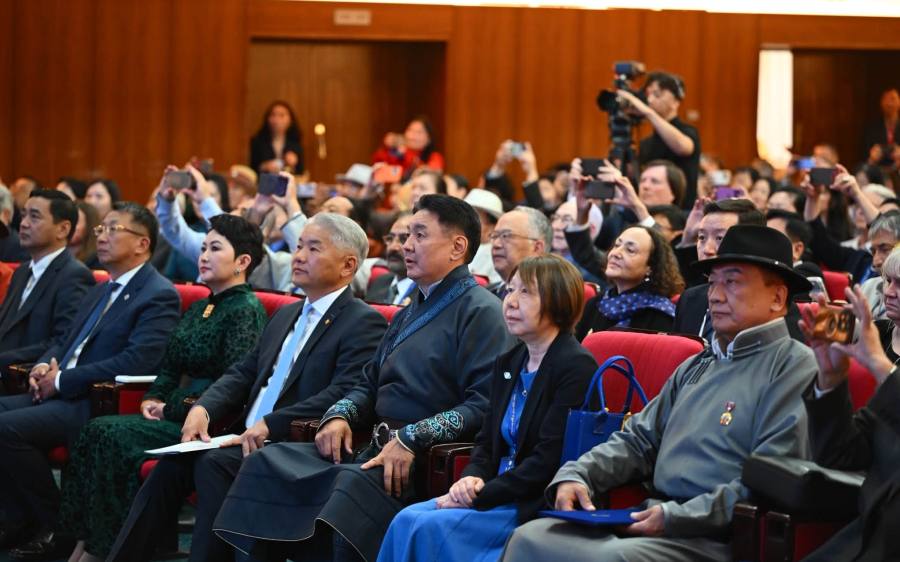
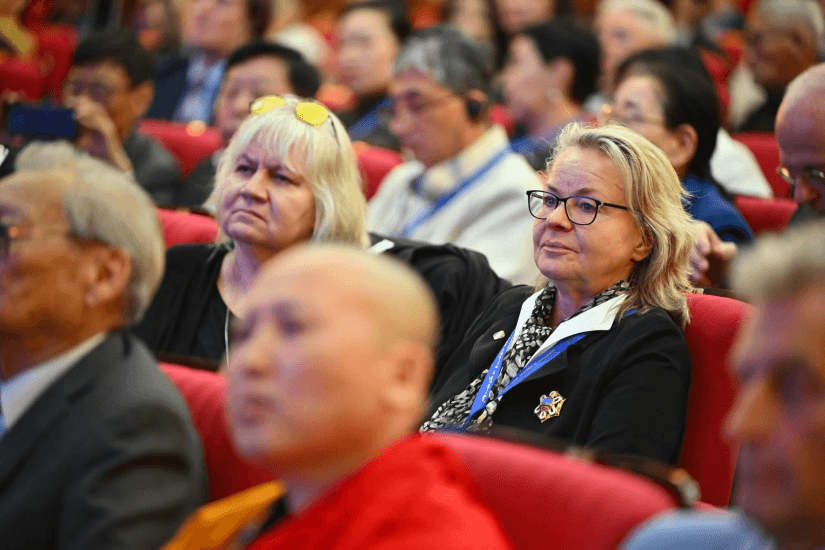
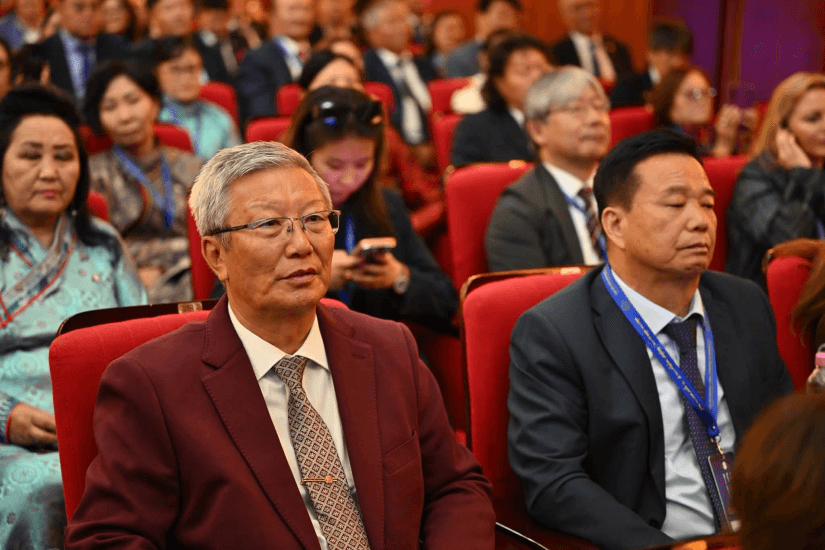
Ulaanbaatar, August 10, 2026 /MONTSAME/. Organized under the auspices of President of Mongolia Khurelsukh Ukhnaa, The 13th International Congress of Mongolists under the theme "Mongolian Studies: Tradition and Modernity" opened on August 10, 2026.
 Opening the congress, President Khurelsukh stated: "On behalf of the State and the people of Mongolia, I extend my heartfelt gratitude to you, highly esteemed scholars, who serve as academic envoys connecting the Mongols with the world — by studying the origins, history, language, culture, and way of life of the land and people of Mongolia through scientific theory and methodology, disseminating accurate and objective knowledge worldwide, and making the name of Mongolia resonate across the globe.
I am pleased to highlight that the ancient, proud history and heroic achievements of our ancestors — the Mongols who once brought peace to the world — are becoming ever clearer through your research as Mongol scholars, with historical chronicles and primary sources continuing to grow and enrich.
Supporting in every way the scholars and researchers who have dedicated their intellect, heart, and tireless efforts to uncovering and studying the traces left by the Mongol nation throughout world history from ancient times to the present, as well as the invaluable heritage created within the vast expanse of human culture, and expanding and developing Mongol studies, has always been a noble duty of the State of Mongolia.
The President further noted, “We must place special emphasis on expanding traditional fields of Mongol studies, broadly disseminating research findings, intensifying international and regional collaboration through joint initiatives, and ensuring a strong continuity among scholars. Nurturing the next generation of researchers, expanding international scholarship programs, and passing down the rich expertise of seasoned academics will safeguard the future growth and sustainability of Mongol studies. Furthermore, technological breakthroughs, such as artificial intelligence, big data, digital archives, and online databases, are unlocking unprecedented opportunities for the field. It is therefore essential that we deepen our cooperation to digitize the written Mongol language, historical records, and cultural heritage, bringing them into wider global academic circulation and building open-access repositories.
As the Head of State of Mongolia, I emphasize that your initiatives, recommendations, and active collaboration, esteemed scholars, are vital to these endeavors. Therefore, as the global hub for Mongol studies, Mongolia will pursue consistent and sustainable policies to advance the field, support research institutions and academics, work in close partnership with scholars, and provide unflagging support in every way possible.”
 During the event, Enkhbayar Jadamba, Chairman of the Organizing Committee for The 13th International Congress of Mongolists, stated: "In its national security policy and concept, Mongolia has defined the protection, research, and development of its national language, history, culture, traditions, and heritage as one of its top priorities. Therefore, establishing the Foundation for Supporting Mongol Studies by decree of the President of Mongolia and creating the National Council for Mongol Studies by decision of the State Great Khural (Parliament) marked important steps in strengthening the policy, organizational, and financial frameworks of this field.
Furthermore, the step-by-step implementation of the national program for developing Mongol studies by the Government has created tangible opportunities to expand research, training, promotion, and international cooperation, yielding the following results:
-New Mongol studies centers have been established at universities and research institutions in many countries, while others have resumed operations.
-Collaboration between domestic and foreign scholars has reached a new level.
-A new generation of young Mongolists has been fostered.
-Major fundamental research works have been published, and the benefits of academic cooperation have increased significantly.
These achievements are not only the result of state policy but also a clear reflection of your years of tireless effort and valuable scholarly contributions."
 Yuki Konagaya, President of the International Association for Mongol Studies (IAMS), stated in her greeting: "During our previous congress held in August 2023, seven years after the prior one due to the COVID-19 pandemic, the Association discussed updating its executive structure and organization, deciding to change the frequency of the congress from once every five years to once every three years. Organizing The 13th International Congress of Mongolists in accordance with this reform makes this event special. Mongol studies is flourishing today in many regions and countries worldwide. I am confident that this congress, which brings together around 600 scholars and researchers from over 30 countries, will produce wise decisions urging unity and respect for history, culture, and heritage."
 Demberel Sodnomsambuu, President of the Mongolian Academy of Sciences (MAS), also noted in his greeting: "More than 70 years ago, at a time when Mongolists around the world did not yet have the opportunity to gather under one roof, Mongolia's institute of science and higher education keenly recognized the situation and initiated an international academic congress, a historic decision that launched a new era of Mongolian studies. The First International Congress of Language and Literature Scholars of Mongolia, held in Ulaanbaatar in 1959, was the historic beginning of institutional development in international Mongolian studies. Taking this opportunity, I would like to share the following ideas regarding the development of Mongol studies:
a. The foundation of success in Mongol studies is our creative cooperation.
b. The future of Mongol studies lies in our successors, the young Mongolists.
c. Regarding Mongol studies and new research trends, it is impossible today to imagine humanity's future development apart from artificial intelligence, big data, scientific and technological advancements, and innovative solutions.
Therefore, I propose joint efforts to establish a Mongol studies big data and digital platform. Let us adopt new methodologies and approaches in science, technology, and innovation, adhere to internationally accepted AI legal regulations and ethics, protect cultural diversity, and work together guided by mutual understanding and respect through advanced new methodologies."
Continuing through August 13, the congress will feature breakout sessions held at the Chinggis Khaan National Museum, Academic Buildings I and II of NUM, the Mongolia-Japan Center, the NUM Library, and the Teacher-Student Development Center. Attendees will have the opportunity to engage with over 530 presentations and discussions encompassing the language, archaeology, culture, arts, literature, ethnography, traditional knowledge, and contemporary society of Mongolia.
Historically, the First International Congress of Mongolian Language and Literature Scholars was organized in Ulaanbaatar 67 years ago in 1959, with over 40 scholars from 15 countries participating. Over time, this international conference has continuously expanded in scope and content. Across the past 12 congresses, nearly 4,000 scholars and researchers from over 60 countries have participated, presenting and discussing more than 3,000 papers in over 20 fields, including linguistics, history, archaeology, anthropology, ethnography, religion, culture, and international relations.