



Water Projects in Mongolia Highlighted
Environment
On the occasion of World Water Day
Ulaanbaatar,
March 21, 2026 /MONTSAME/. Mongolia has implemented several model water
conservation and restoration projects in recent years. Below is an overview of
key initiatives.
Khuvsgul
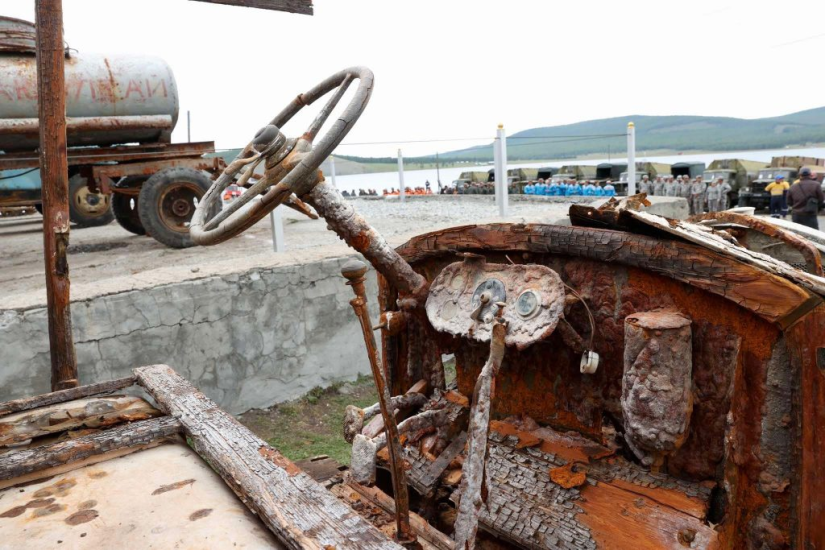
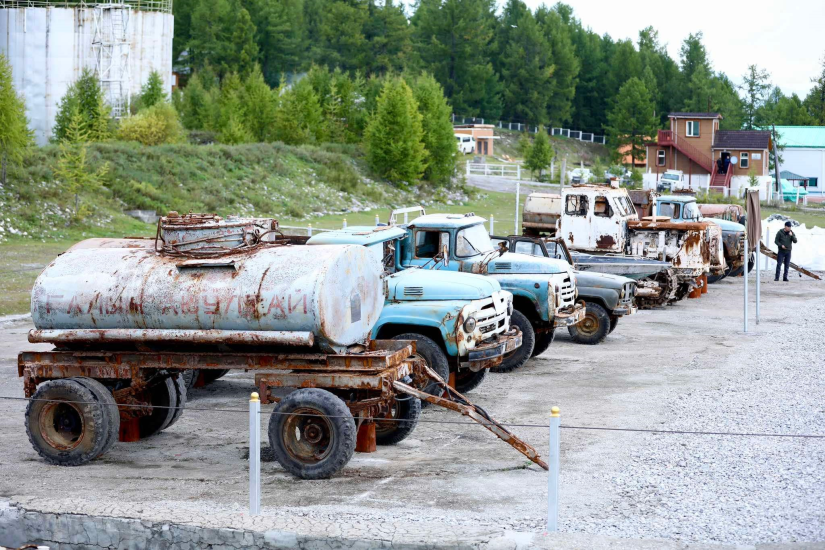
Lake Clean-Up, Sunken Vehicles and Waste Retrieved
While
serving as Prime Minister, President Khurelsukh Ukhnaa incorporated goals to
protect freshwater sources and preserve natural ecosystems into Mongolia's long-term development policy “Vision-2050” and the Government’s 2020-2040 Action
Program.
 After
assuming the presidency, he initiated efforts to protect the ecosystem of
Khuvsgul Lake, improve infrastructure, and reduce pollution by locating and
removing hazardous waste from the lakebed.
After
assuming the presidency, he initiated efforts to protect the ecosystem of
Khuvsgul Lake, improve infrastructure, and reduce pollution by locating and
removing hazardous waste from the lakebed.
A major
milestone was the retrieval of the “Sukhbaatar” ship, which had sunk in 1985 and
was raised in 2021. Since then, a joint task force of more than 120 personnel,
including the National Emergency Management Agency, the Armed Forces, the
Ministry of Environment and Tourism, the Mongolian University of Science and
Technology, the National University of Defence, and private sector
representatives, has retrieved 11 vehicles and pieces of equipment from depths
of 33-171 meters.
These efforts prevented approximately 50 tonnes of fuel, oil, and
hazardous waste from contaminating the lake.
Such pollution could have affected over 70 square kilometers of the lake’s surface and spread to the Eg River, Selenge River, and ultimately Lake Baikal, which holds about 20 percent of the world’s freshwater.
Up to 50 percent of fish, fry, and aquatic microorganisms could die, posing a significant risk of severe damage to the ecosystem of Khuvsgul Lake. It contains around 75 percent of Mongolia’s freshwater reserves and about 0.4 percent of the world’s total, and it takes roughly 500 years for its water to naturally renew. It also holds a volume of freshwater equivalent to ten years of the total flow of Mongolia’s rivers, while about 25 percent of the country’s forest resources and the majority of its rare animals and plants are found in the surrounding area.
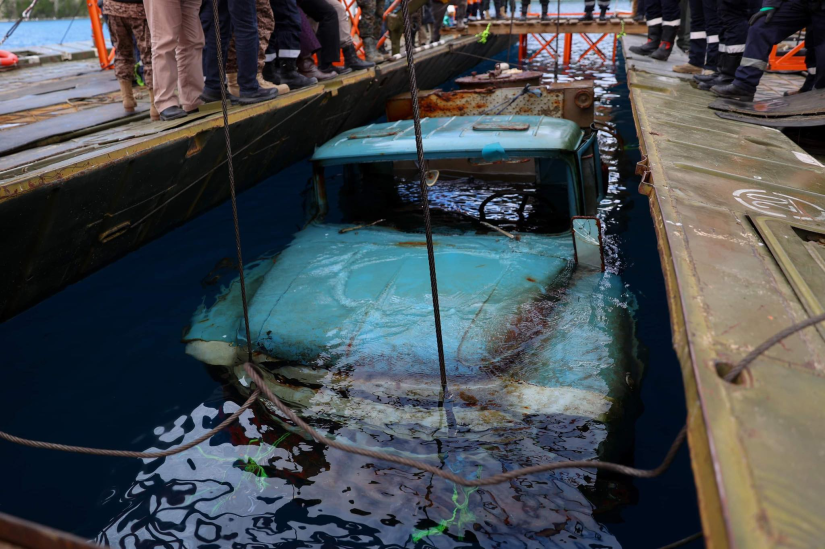 The operation to clean Khuvsgul Lake and recover sunken vehicles and equipment lasted four years.

Ganga Lake Restoration Project Shows Positive
Results
Efforts to restore Ganga Lake, which had been on the verge of drying up, began in 2016 under then-Prime Minister Khurelsukh Ukhnaa. The project has since shown tangible results, with water levels returning to those recorded in 2005. Studies show that water levels increased by 30–40 cm in 2020, and by an additional 8–12 cm in April to May, 2021.
The project was implemented in two
phases. The first included feasibility studies, vegetation research,
installation of 10 wells for pasture and 3 wells for irrigation, construction of
over 15 km of protective fencing, and the establishment of green zones and
nurseries.
The second phase focused on
restoring natural springs feeding the lake, stabilizing shorelines against sand
movement, expanding forest belts, and building birdwatching towers.
This project has become a model for restoring other rivers and lakes in Mongolia, including the Kherlen River, Ugii Lake, Tuul River, Buir Lake, and others

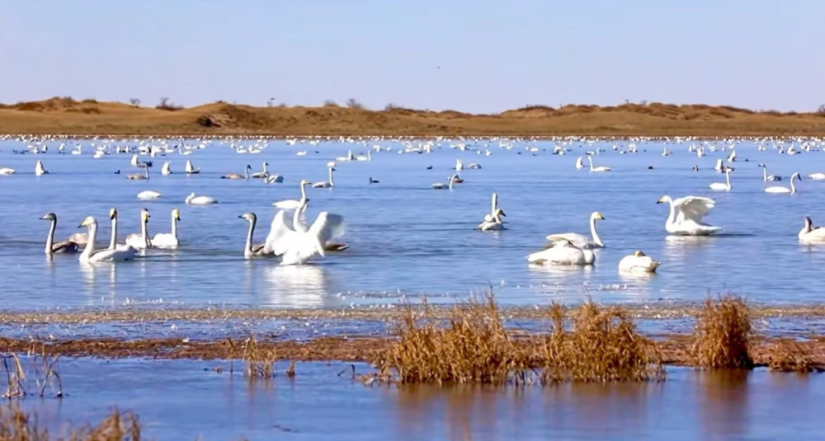
Since the restoration of Ganga Lake, more than 5,000 swans have gathered at the lake since the autumn of 2022.

Ugii Lake Protection Project Running in Second Phase
A comprehensive project to protect
Ugii Lake from pollution and drying, also initiated by President Khurelsukh, is
now successfully continuing into its second phase.
Authorities have taken full control
of the Khugshin Orkhon River, the lake’s only inflow, preventing unauthorized
diversions. Protective fencing covering 10 km has been installed to safeguard
key sections from human and livestock impact.
As a result, water inflow into the lake has increased, outflow into the Orkhon River has stabilized, vegetation cover has significantly improved, and bird habitats have been restored. In addition, the west shore of the lake has been protected from pollution.
The use of protective fencing as a
natural restoration method has become a recognized Mongolian best practice
internationally.
Additional measures include separating tourism and conservation zones using floating barriers, leading to increased fish populations and improved breeding conditions for rare bird species.

Reservoir Project Planned at Bumbat Spring
A project
is underway to improve the surroundings of Bumbat Spring, located in Tolgoitiin
Baruun Salaa area in Songinokhairkhan district, Ulaanbaatar.
As part
of the “One Soum-One Lake” program, a 16.9 thousand cubic meter capacity reservoir
will be constructed to collect water from Bumbat springs and the Baruun Salaa
river basin.
Preparatory work began in February, with construction scheduled for completion by June 30, 2026. The project is expected to reduce risks of floods and drought, increase surface water supply, protect over 9.8 thousand residents across 3,191 households, as well as improve air humidity and reduce dust pollution.
The Water Agency is coordinating the project, with “Prestige Engineering” LLC serving as the contractor.