Loading…
Loading…

MONTSAME
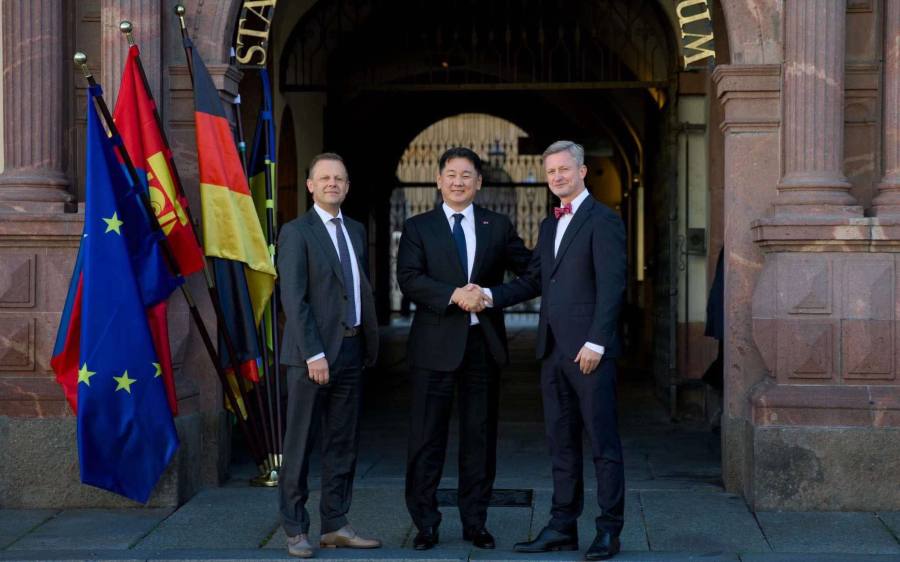
Ulaanbaatar, October 23, 2026 /MONTSAME/. President Khurelsukh Ukhnaa visited the Free State of Saxony as part of his State Visit to the Federal Republic of Germany.
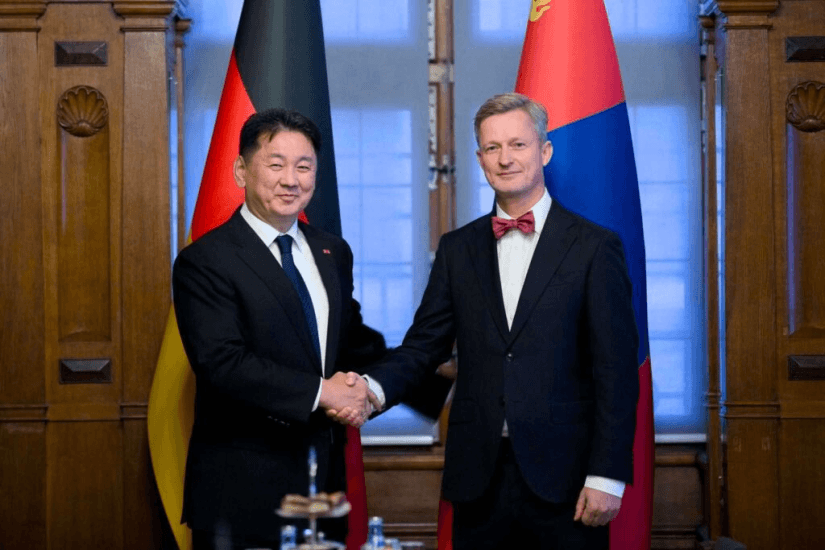
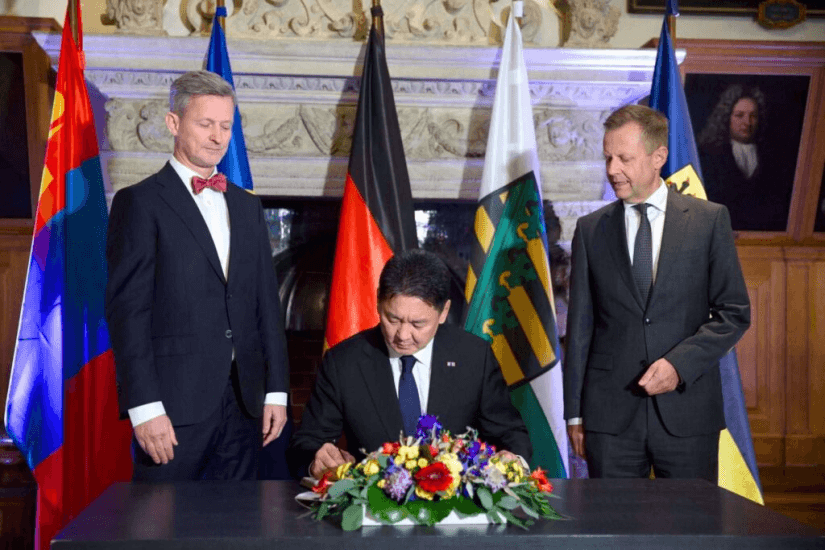
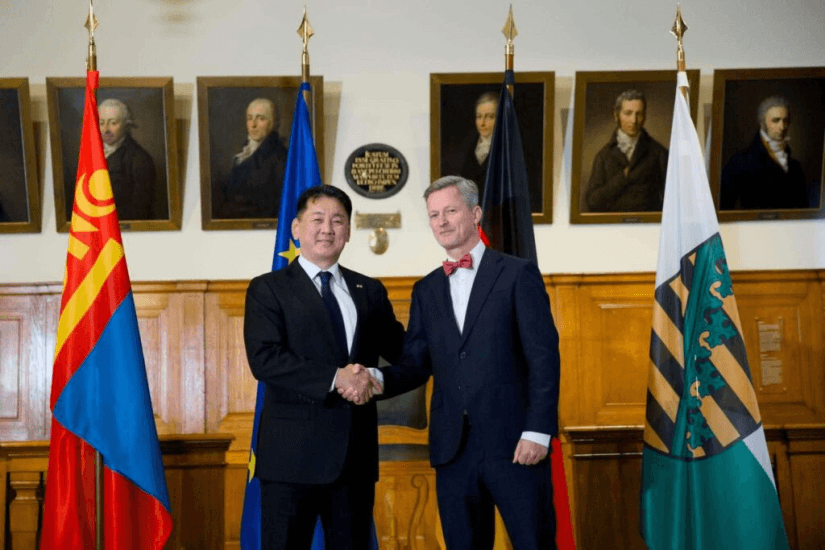
Upon his arrival in Leipzig, Andreas Handschuh, Head of the State Chancellery and State Secretary for Federal and European Affairs of the Free State of Saxony, and Torsten Bonew, First Mayor and Deputy Mayor for Finance of Leipzig, welcomed President Khurelsukh, along with other officials. He also signed the Free State of Saxony's Guest Book and Leipzig's Golden Book.
During the meeting, President Khurelsukh highlighted the century-long ties between Mongolia and Saxony, noting that his visit to the state was an important part of his official program at the invitation of German Federal President Frank-Walter Steinmeier.
In 1926, more than 30 young Mongolians, including prominent writer Natsagdorj Dashdorj, traveled to Germany to pursue their education. They later became part of Mongolia's modern intellectual community and made valuable contributions to the country's development.
The longstanding educational ties between the two countries have continued, with more than 700 Mongolian students currently studying in Germany. Of these, 126 are enrolled at Dresden University of Technology under the “President’s Scholar–2100” scholarship program initiated by President Khurelsukh.
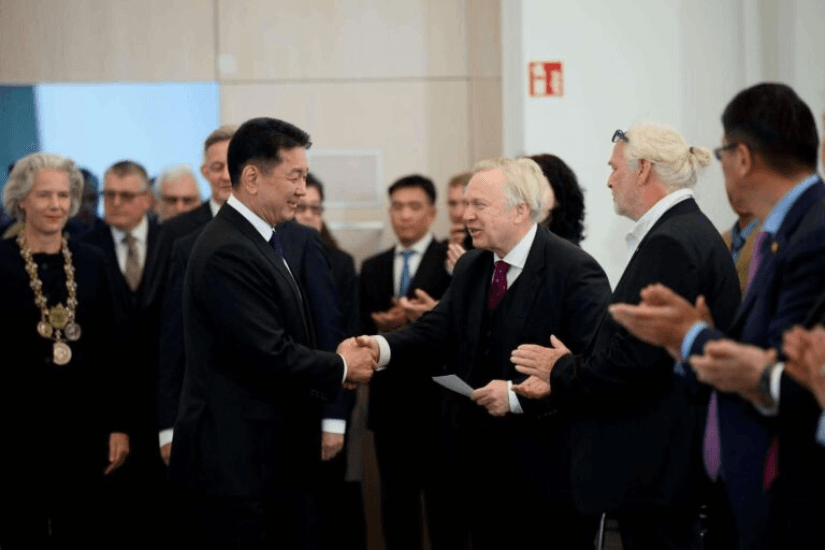
The two sides also welcomed the international academic conference “Mongolia and the Post-Mongol Period: Cultural Exchange and the Environment in Eurasia,” held at Humboldt University of Berlin, and an international conference marking the 120th birth anniversary of Natsagdorj Dashdorj, held at Leipzig University.
In November 2023, Mongolia's Ministry of Education and Science and Saxony's State Ministry for Science, Culture and Tourism signed a Joint Declaration on cooperation in higher education. Saxony's representative office for education and science has been operating in Ulaanbaatar since July 2024.
Saxony has a population of approximately four million and is known for its microelectronics, semiconductor, information technology, automotive, and machinery industries. Dresden and Leipzig are also important centers for higher education and scientific research.