Loading…
Loading…

Unubold B
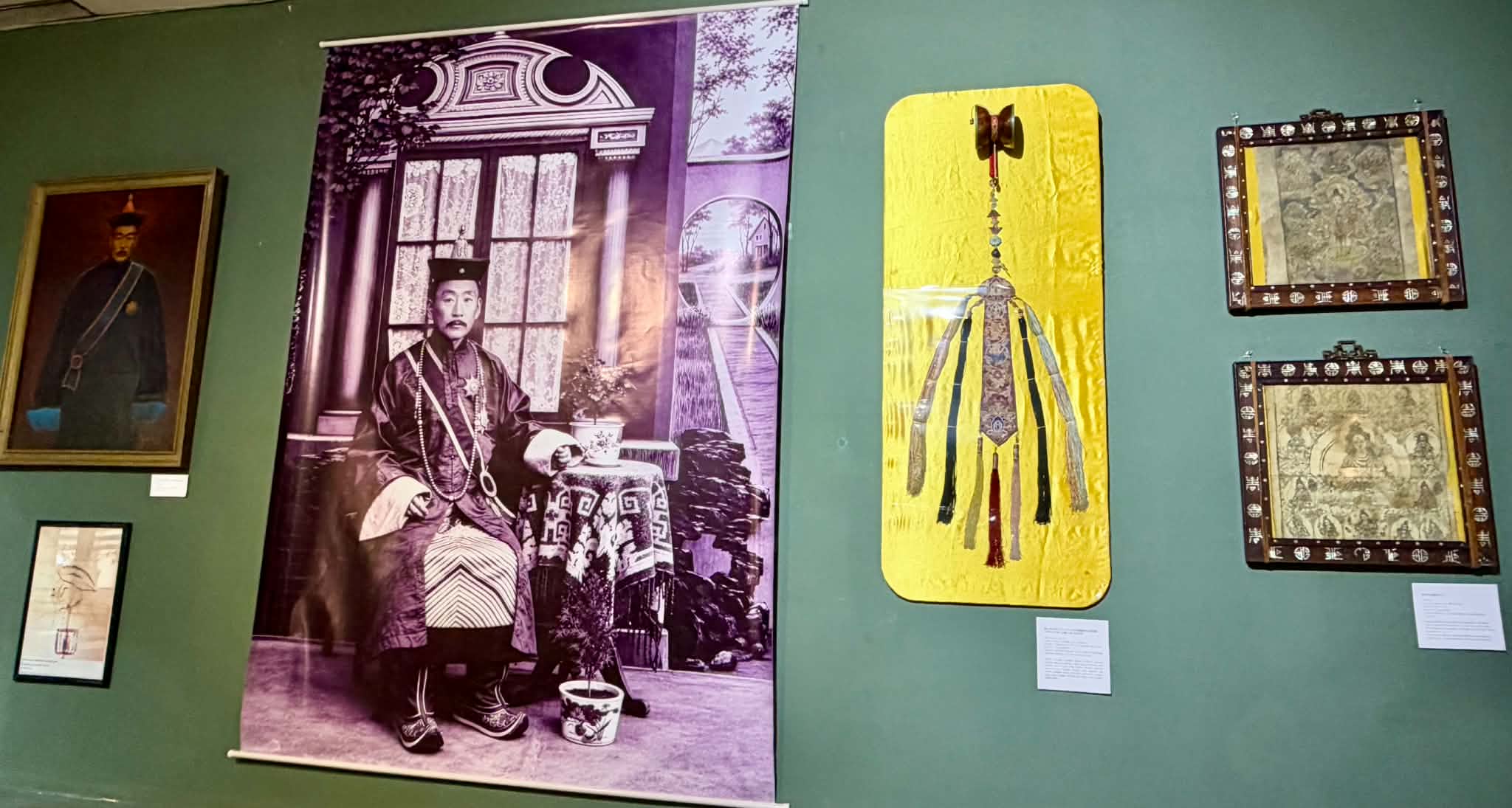
Murun, November 23, 2026 /MONTSAME/. The Central Museum of Khuvsgul aimag hosted a discussion entitled “The Life and Work of Jalkhanz Khutagt Damdinbazar” to mark the 152nd anniversary of his birth.
Researchers, writers, religious figures, museum professionals and members of the public presented papers and exchanged views on Damdinbazar’s life and work, the history of repression at Jalkhanz Monastery, and the cultural heritage and museum exhibits associated with him.
Participants stressed the importance of using historical records and artefacts to study Damdinbazar’s role in Mongolian history and to make his work better known to the public. They also called for the preservation of this cultural heritage for future generations.
Damdinbazar was born in 1874 in Tsogt Gun Banner of Zasagt Khan aimag, in what is now Numrug soum of Zavkhan aimag.
In the first month of summer in 1877, when he was three years old, Damdinbazar was recognised by decree of the Manchu emperor as the eighth incarnation of the Jalkhanz Khutagt. Following divination using a golden urn, Damdinbazar, the son of Tsedensodnom and Sodnom, was proclaimed the reincarnation of the previous Jalkhanz Khutagt. He was enthroned at Ravdanchoinkhorlin Monastery in what is now Burentogtokh soum of Khuvsgul aimag.
Quick-witted and gifted with a strong memory, Damdinbazar studied language and literature, mathematics and astrology, Buddhism, the arts, philosophy, foreign languages, customs and traditional practices. In 1890, he began debating Buddhist doctrine with monastic scholars, drawing the attention of the Bogd Gegeen.
In 1912, Bogd Khaan appointed him Minister for the Pacification of the Western Frontier. In this capacity, he played an important role in expelling the Manchu governor and troops from the region, liberating the city of Khovd and establishing ties with local authorities in Tagna, Uriankhai and the lands beyond the Altai Mountains. His efforts helped bring the western frontier under Mongolian rule.
In 1919, Damdinbazar travelled to Beijing for talks with the Chinese leadership. Historical sources describe the talks as a significant event in relations between Mongolia and China at the time.
Among the lamas and nobles of his day, Damdinbazar was one of the most active supporters of the National Democratic Revolution of 1921. As a political and public figure, he showed sound judgement, respected his colleagues and favoured negotiation to resolve disputes. These qualities and his record of public service contributed to his appointment as Prime Minister of Mongolia in 1922.
Most of his writings were destroyed during the repression of the 1930s. Only half of the four works listed above survive today.