Loading…
Loading…

Ooluun Batbayar
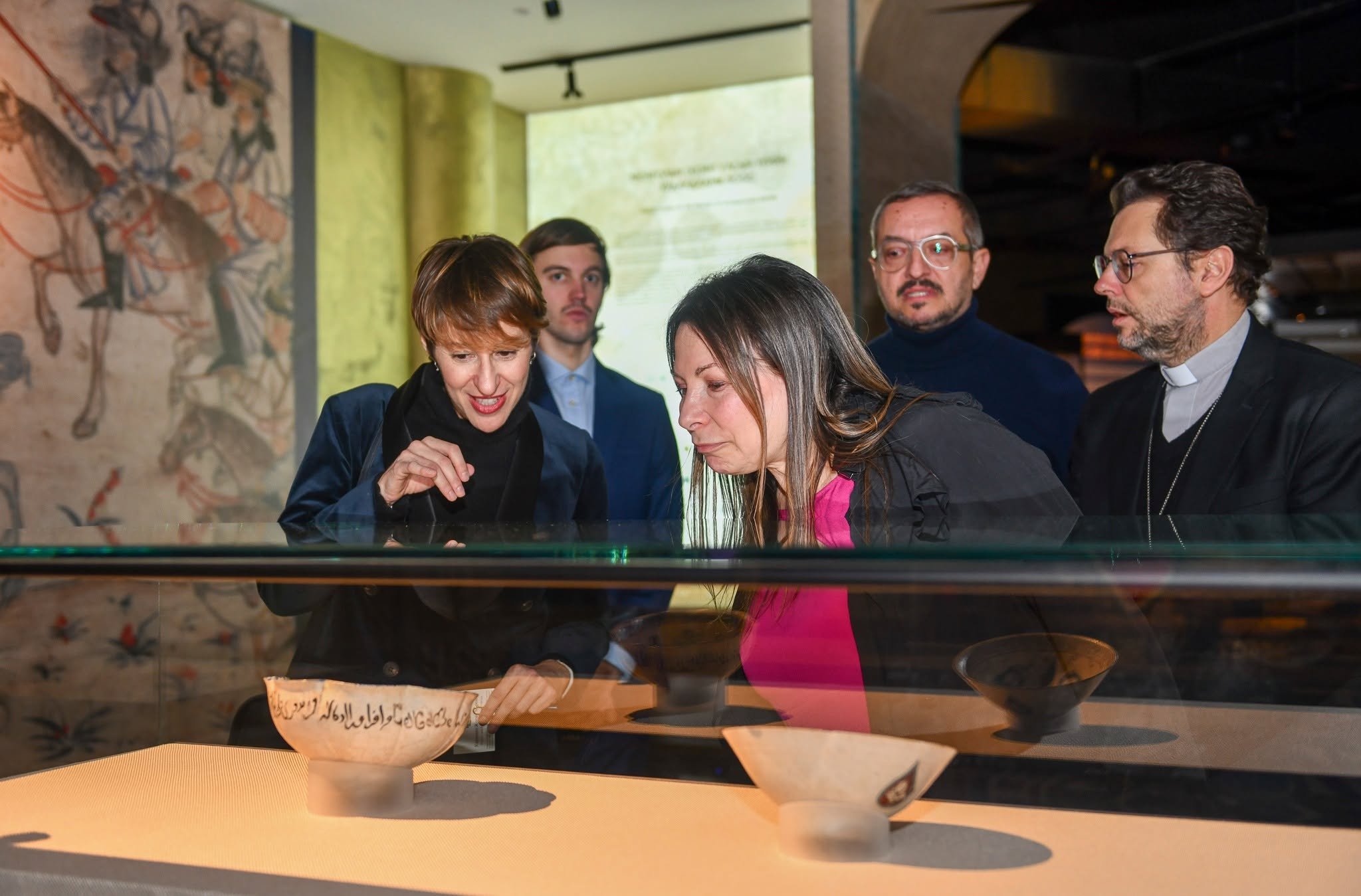
Ulaanbaatar, November 24, 2026 /MONTSAME/. The international special exhibition “The Mongol World: The Ilkhanate and Persian Art” opened at the Chinggis Khaan National Museum on November 23, bringing rare works from Italy to Mongolia.
The exhibition aims to present a fresh perspective on the influence of the Mongol Empire and the Mongols on the development of world culture, art, and science. Organized through cooperation between the Chinggis Khaan National Museum and the Museum of Oriental Art in Turin, Italy, it features a selection of exceptionally valuable artifacts from the Italian museum’s collection. Their arrival in Mongolia marks the first time these works have been exhibited in Asia, offering Mongolian audiences a rare opportunity to explore the Mongols’ contributions to world civilization through original historical artifacts.
At the opening ceremony, Dr. Erdmaa D., Deputy Director of the Chinggis Khaan National Museum, highlighted the role of the Mongol Empire, established by Chinggis Khaan and his successors, in fostering trade, economic ties and cultural exchange across the vast Eurasian continent.

“These connections and influences also left a profound mark on the development of art and culture in the Islamic world,” she said.
She noted that the intricate craftsmanship and decorative patterns of the Persian ceramics and architectural terracotta ornaments on display reflect the artistic skills and refined aesthetic sensibilities of the period. “Through these original artifacts, visitors can explore the art and culture of the Ilkhanate period and gain a broader understanding of Mongolian history in the context of cultural interactions across Eurasia,” she said.
She added that one of the museum’s key objectives is to conduct research on Mongolia’s statehood traditions, history and cultural heritage and promote them both nationally and internationally. Bringing rare artifacts from collections of museums around the world to Mongolia for public display is also an important part of its work.
Davide Quadrio, Director and Curator of the Museum of Oriental Art in Turin, said the two museums had been cooperating for several years. A year ago, they jointly presented the renowned Mongolian artist and sculptor Undur Gegeen Zanabazar’s sculpture of Green Tara in Italy, marking an important milestone in their partnership.

“This time, we are presenting valuable artifacts related to the history and culture of the Mongol Empire, particularly the Ilkhanate, to Mongolian audiences,” he said.
He explained that the exhibition seeks to show how the influence of the Mongol Empire, especially during the Ilkhanate period, was reflected in the daily lives, material culture, and art of people in the Middle East.
The two museums also worked together to select the exhibits. Experts and researchers from the Chinggis Khaan National Museum were invited to Italy to study the Italian museum’s collection and identify artifacts suitable for presentation in Mongolia.
Batbaatar B., Senior Researcher and Curator at the Chinggis Khaan National Museum, said historical accounts had often portrayed the period of Mongol rule in Europe, Eurasia and other parts of the world primarily in terms of conquest, invasion and destruction.

However, over the past decade, international scholars have increasingly examined this history from a different perspective, recognizing the development of science, culture and art under the patronage of the Mongol Great Khaans. The current exhibition reflects this evolving approach to historical research, he said.
A total of 13 ceramic, terracotta and decorative art objects from the Museum of Oriental Art in Italy have been brought to Mongolia for the exhibition. These artifacts represent the cultural heritage of territories that were under Mongol rule and patronage during the period.
Batbaatar noted that Persian traditional art is believed to have experienced a period of decline and stagnation before the Mongol conquests. Following the establishment of the Ilkhanate in the Islamic world by Khulegu Khaan in 1256, however, the Mongol rulers began investing substantially in the development of art, culture and various fields of science in the region.
As a result, fields such as art, culture, and astronomy experienced significant growth, he said, adding that the ceramics, terracotta objects and decorative works on display provide tangible evidence of this cultural flourishing.
Among the notable exhibits is a ceramic bowl. According to the exhibition's curatorial interpretation, before the Mongol conquests, certain restrictions existed in Islamic art regarding the depiction of human figures, particularly women. Under the influence of the Mongol Empire, new artistic trends emerged, and representations of human figures, nature, Mongol queens, and motifs inspired by nomadic culture began appearing in ceramics and paintings.

Another distinctive piece is a vase with a mouth shaped like a rooster’s head. In Islamic tradition, the rooster is regarded as a symbol of the arrival of dawn, as its crowing announces the end of darkness and the coming of light. It is also associated with driving away the darkness of night and evil.
The exhibition will be open to the public until December 20.