Loading…
Loading…

Ooluun Batbayar
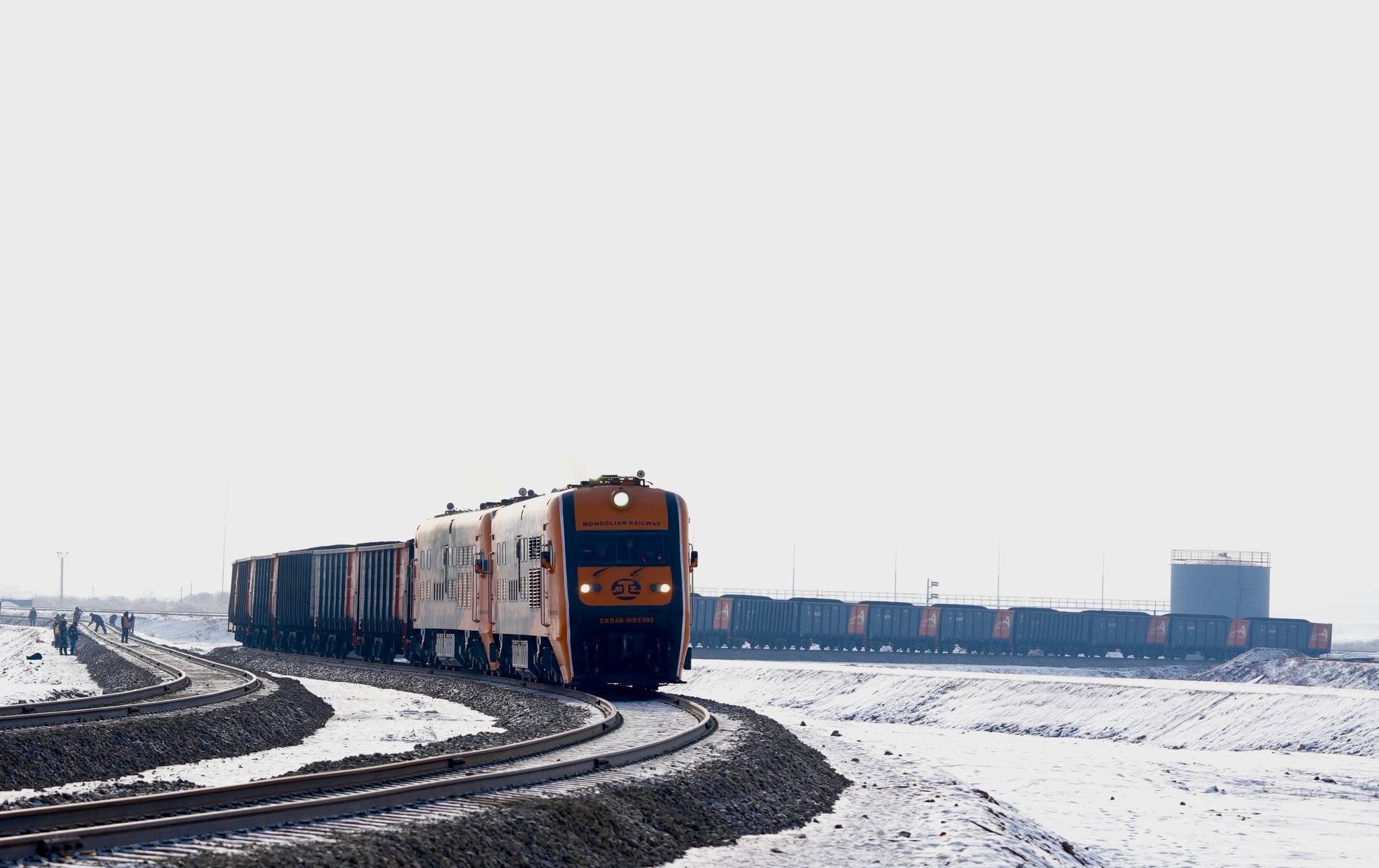
Ulaanbaatar, November 28, 2026 /MONTSAME/. Mongolia has commissioned a new 17.4-kilometre railway connecting Shine Urtuu and Tolgoit, as a continuation of the 127.1-kilometre Bagakhangai–Khushig Valley–Emeelt railway project implemented by state-owned Mongolian Railway (MTZ).
The new railway, built to the 1,520 mm gauge standard, is designed to transport up to 30 million tonnes of freight annually. Construction began in August 2026 and was completed within just three months. The new railway has been connected to the main network of Ulaanbaatar Railway (UBTZ), creating an alternative route for coal freight trains to bypass central Ulaanbaatar.
With the railway entering operation, approximately 1,800 heavy-duty trucks are expected to be removed from the capital's roads. In addition, around 2.5 million tonnes of hazardous cargo annually, including coal and 33 other categories of goods, will be transported without passing through central Ulaanbaatar. The new connection is expected to reduce congestion on the capital's central railway network and facilitate more efficient coal deliveries to thermal power plants. It is also expected to ease road traffic congestion caused by vehicles waiting for freight trains at railway crossings.
Furthermore, restricting the transportation of potentially hazardous cargo, including raw coal, petroleum products, lubricants and chemicals, through densely populated residential areas is expected to improve public safety and reduce dust and air pollution.
The Bagakhangai–Khushig Valley–Emeelt railway is a strategic infrastructure project designed to establish a new freight transportation and logistics corridor bypassing central Ulaanbaatar and its densely populated districts.
The main railway branches off from Bagakhangai station in Bagakhangai District and passes through Khushig Valley in Sergelen soum and the territory of Altanbulag soum in Tuv aimag before reaching Emeelt station. The 127.1-kilometre railway infrastructure includes four stations and three passing loops.
The project was implemented by state-owned Mongolian Railway, with the participation of more than 160 domestic companies and over 4,000 engineering, technical and construction workers.
Prime Minister Uchral Nyam-Osor, Minister of Road and Transport Delgersaikhan Borkhuu and other government officials attended the railway commissioning ceremony.