



Government Seeks Authority to Set Fuel Import Duties as Prices Surge
Politics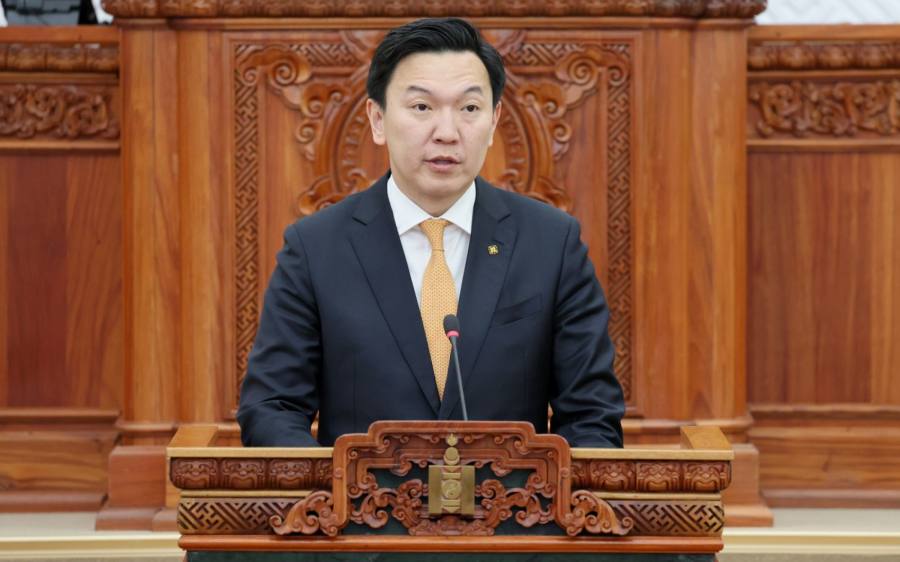
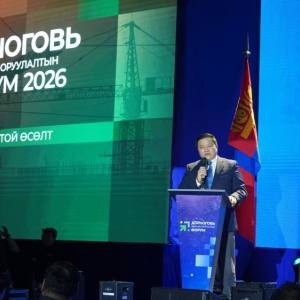
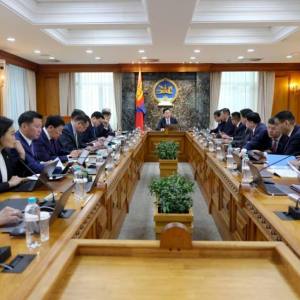
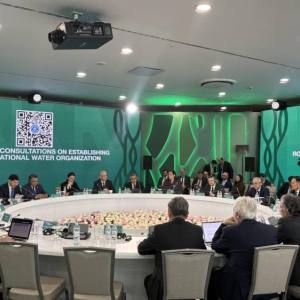
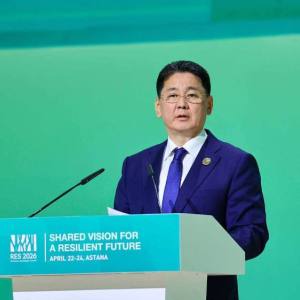
Ulaanbaatar, April 3, 2026 /MONTSAME/. Prime Minister Uchral Nyam-Osor presented a draft resolution to amend the 1999 parliamentary resolution on approving customs tariff rates on imported goods and delivered remarks at the plenary session of the State Great Khural on April 2, 2026.
He
noted that Mongolia’s consumption of petroleum products has been rising
steadily alongside economic and mining sector growth, with imports reaching 2.9
million tons in 2025—an increase of 0.1 million tons from the previous year.
Imports are projected to reach 3.0 million tons in 2026 and 3.1 million tons in
2027.
Mongolia
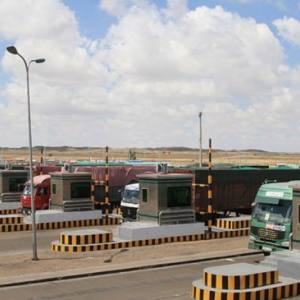
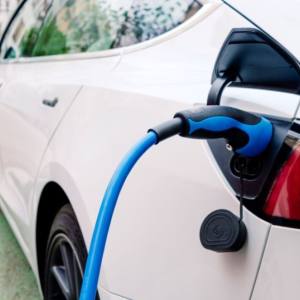
currently meets 100 percent of its fuel demand through imports, with around 98
percent supplied by Russia and the remainder by China.
The
Prime Minister highlighted sharp increases in April border prices from Russia’s
Rosneft, with fuel prices rising by USD
441–648 per ton depending on the type. As a result, domestic retail
prices—except for regular AI-92 gasoline—are expected to increase
significantly, including diesel and higher-grade gasoline products.
He warned that continued geopolitical tensions in the Middle East could drive Brent crude prices up to USD 130–200 per barrel, which would sharply raise import and retail fuel prices in Mongolia. In a worst-case scenario, diesel prices could reach as high as MNT 9,700 per liter. Despite this, Mongolia has maintained stable prices for AI-92 gasoline since May 2022 through an agreement with Rosneft, fixing border prices at USD 705 per ton.
The
Prime Minister also noted that exempting fuels from customs duties carries
fiscal risks, as the state currently collects approximately MNT 100 billion
annually from AI-92 gasoline and about MNT 300 billion from diesel.
To respond more effectively to global market fluctuations, the government proposes granting itself authority to set customs duty rates on petroleum products, enabling quicker adjustments to stabilize domestic fuel prices. Following the discussion, 58.8 percent of the attending MPs supported proceeding with the draft resolution at the conceptual stage, and the proposal was referred to the Standing Committee on Budget for further review.