



Uchral Nyam-Osor: Government Shifts to Full Austerity Mode
Politics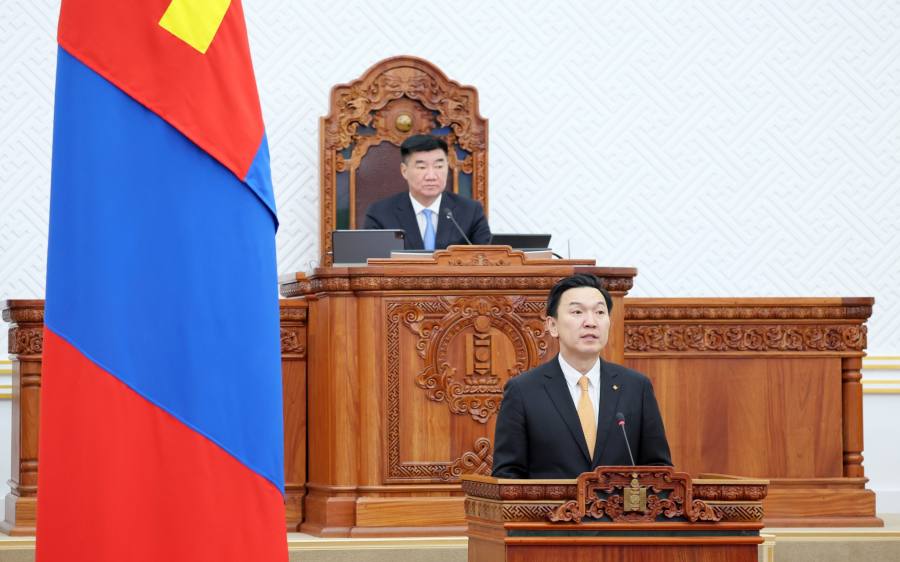
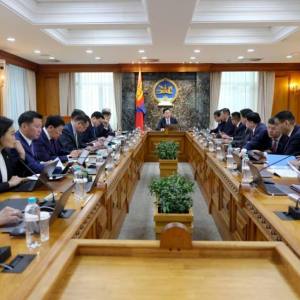
Ulaanbaatar, April 4, 2026 /MONTSAME/. After appointing and formalizing the members of the Government, Prime Minister Uchral Nyam-Osor addressed the plenary session of the State Great Khural (Parliament).
He stated that the Government consists of 19 members,
including 16 ministers from the Mongolian People’s Party, two from the National
Labor Party HUN Party, and one from the “National Coalition.” Of the Cabinet
members, 79 percent have prior government experience, while 21 percent are
newly appointed.
The Prime Minister emphasized that the Government is being
formed at an extraordinary time marked by heightened global geopolitical
tensions, disruptions in fuel and energy supplies, a doubling of prices,
shortages, rising inflation, and price surges, prompting many countries to declare
states of emergency. He warned that sharp increases in fuel prices—considered
the foundation of all other costs—pose serious risks, including accelerating
inflation, eroding incomes, driving capital outflows, and increasing operating
costs in key export sectors such as mining and transport.
He acknowledged that it is not possible to control fuel
prices, stressing instead that the Government will focus on preventing supply
disruptions and shortages. He added that, just as Mongolia overcame the global
pandemic, it must now confront the fuel and energy crisis.
The Prime Minister stressed that the country needs solutions rather than reshuffling positions, noting that reorganizing offices, facilities, documentation, and administrative systems would cost tens of billions of tugriks. Reducing the number of ministers would not necessarily save money and could instead lead to additional costs, including layoffs of civil servants, legal disputes, and compensation funded by taxpayers. He said the Government will not waste time or money for short-term political gains.
Describing fuel price increases and shortages as an
“economic state of war,” he said the Government will respond with full
capacity. Structural overlaps and inefficiencies will be carefully reviewed and
optimized with thorough functional analysis, cautioning against making hasty or
harmful decisions.
He noted that there are currently around 3,000 vacant
positions in the civil service, which will not be filled—equivalent to
eliminating 26 ministries in terms of savings. This alone would save
approximately 7.4 billion tugriks annually in salary expenses.
While a compact structure is important, he emphasized that
an optimal structure is even more critical. Twelve deputy minister positions
will be eliminated, leaving four aligned with core policy areas.
He openly stated that the Cabinet composition reflects the
need for stability in a Parliament made up of multiple parties, coalitions, and
a strong opposition.
The Prime Minister stressed that Cabinet members will be
held accountable in two key areas: performance and ethics. Those facing
allegations must have their cases reviewed by legal authorities and are
expected to initiate such reviews themselves to clear any doubts.
Finally, he announced that the Government will immediately
shift to a full austerity mode without waiting for a budget amendment. It will
prioritize prudent management of public finances, efficient use of available
resources, and the elimination of unnecessary expenditures such as excessive
appointments, meetings, and procurement. He emphasized the need to safeguard
every unit of taxpayer money.