Loading…
Loading…

Ooluun Batbayar
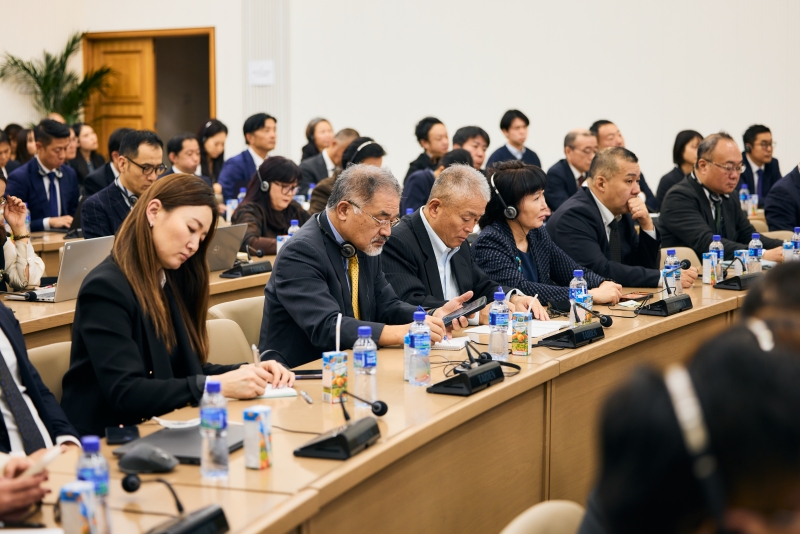
Ulaanbaatar, November 28, 2026 /MONTSAME/. Mongolia and Japan have signed two memoranda of understanding to strengthen cooperation in local development, education and agriculture during the 13th Mongolia–Japan Public-Private Partnership (PPP) Consultation Meeting held in Ulaanbaatar.
The agreements were signed between Bayangol District of Ulaanbaatar and Namegata City in Japan's Ibaraki Prefecture, as well as between the Mongolian University of Life Sciences and Namegata City.
More than 90 representatives from government agencies and the private sectors of both countries attended the consultation meeting, including officials from the Mongolian National Chamber of Commerce and Industry, the Japan-Mongolia Economic Committee, member companies and the Embassy of Japan in Mongolia.
In his opening remarks, Enkhbayar Jadamba, First Deputy Prime Minister and Minister of Economy and Development of Mongolia described Japan as not only one of Mongolia's strategic third-neighbour partners but also a reliable partner in economic development and investment. He emphasized that mutually beneficial cooperation in trade, economic development and investment plays a central role in expanding bilateral relations.
Enkhbayar said the consultation meeting provides an important platform for strengthening public-private dialogue, improving the business environment and identifying solutions to increase investment.
He expressed confidence that the discussions would help assess bilateral trade and economic relations, address existing challenges and identify new opportunities for cooperation in mining, food production, agriculture, energy, environmental protection, education, science, technology and artificial intelligence.
He also highlighted the importance of further implementing the Mongolia-Japan Economic Partnership Agreement (EPA) and enabling businesses in both countries to make greater use of the tariff concessions and market access opportunities provided under the agreement.
The Mongolian side also called for greater Japanese participation in major infrastructure, energy and construction projects through effective PPP mechanisms to reduce investment risks and encourage joint participation.
Additional areas of proposed cooperation include introducing Japanese advanced technologies and environmentally friendly solutions in renewable energy projects, supporting the transition to a green economy, strengthening regional energy security, and improving organic product standards to meet international requirements and expand exports to the Japanese market.
According to the data from the National Statistics Office of Mongolia, bilateral trade between Mongolia and Japan reached approximately USD 1.2 billion last year.