Ulaanbaatar





Gobi Desert Strictly Protected Area Administration Awarded Altan Gadas Medal
Environment
Ulaanbaatar, December 4, 2025
/MONTSAME/. By a decree of the President of Mongolia, the Administration of
the Great Gobi Strictly Protected Area has been awarded the Altan Gadas (Polar
Star) medal on the 50th anniversary of its establishment.
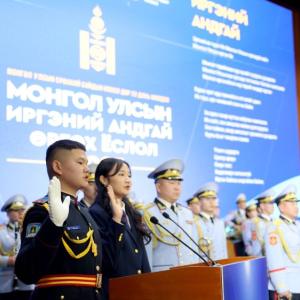
During the Consultative Meeting of Specially Protected Area Administrations, Chief of Staff of the President’s Office, Uilstuguldur Altankhuyag, read and presented the message sent by President Khurelsukh and conferred the award. Minister of Environment and Climate Change Batbaatar Bat noted that this Altan Gadas medal is the first prestigious State Honor ever granted to the environmental sector and expressed his gratitude.

The establishment of the Great
Gobi Strictly Protected Area, along with its Protection Administration, in the Mongolian
Gobi by Decree No. 84 of the Presidium of the People’s Great Khural in 1975,
was an event of special significance not only to Mongolia but also to the rest
of the world. This decision laid the foundation for the full preservation of one
of the world’s top ten largest intact ecosystems, specifically the rare and
unique Gobi Desert ecosystem, which remained untouched by human activity and
preserved in its pristine natural state. As a result, this area has reached a level
of international recognition for its flora and fauna, ecological value, and
significance as a strictly protected zone.
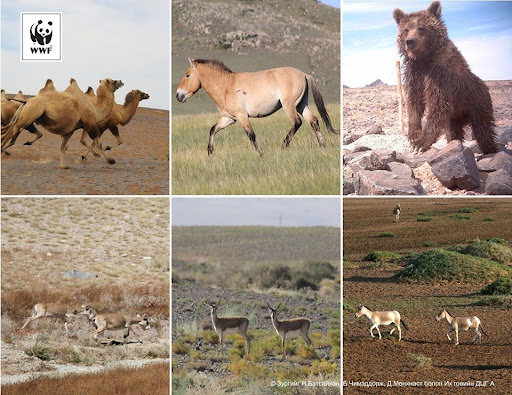
Since the establishment of the Great Gobi Strictly Protected Area, numerous major international and national projects have been successfully implemented, including “Development of the Great Gobi Strictly Protected Area,” “Przewalski’s Horse Reintroduction,” “Conservation of the Great Gobi Ecosystem and Its Umbrella Species,” “Gobi Bear,” “Breeding of Wild Bactrian Camels,” and “Ensuring the Resilience and Stability of Mongolia’s Native Nature.” As a result, more than 350 Przewalski’s horses, 52 Gobi bears, over 500 wild Bactrian camels, about 11,000 Asiatic wild asses, and around 8,000 goitered gazelles are now thriving and steadily increasing in their homeland, as confirmed by researchers from Mongolia, China, Germany, the United States, France, the Netherlands, the United Kingdom, the Czech Republic, and other countries.
This contributes not only to
protecting biodiversity but also to supporting the livelihoods of local
communities, increasing their participation in nature conservation, enhancing
environmental education for children and youth, and expanding training and
public awareness efforts.