



Tsetsentsolmon: ‘My Grandpa’s Work Laid the Foundation for National Identity Revival of the Democratic Era’
Art & Culture
Ulaanbaatar,
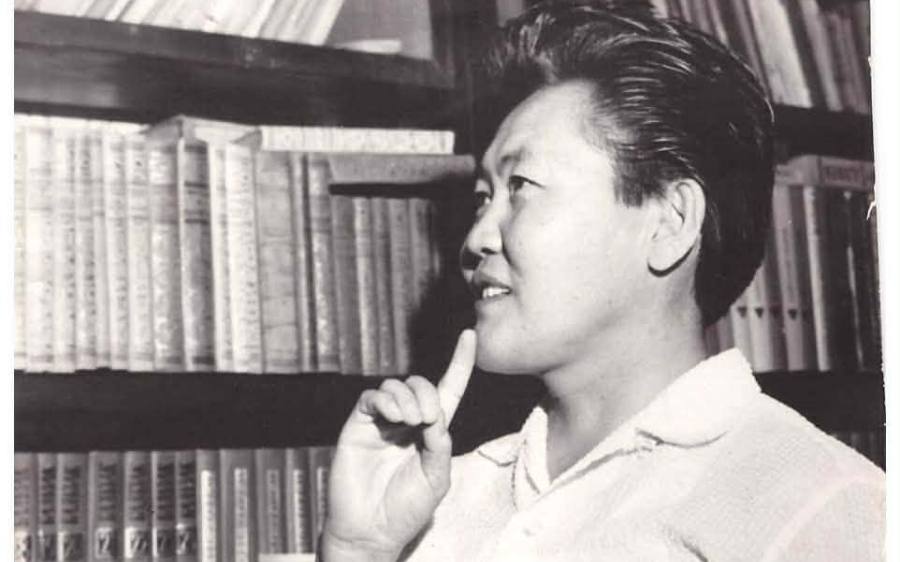
April 22, 2026 /MONTSAME/. It is the 100th anniversary of the birth of Badraa
Jamts - renowned author of lyrics for dozens of songs beloved by the Mongolian
people, including “Khaluun Elgen Nutag,” which was honored as the leading song
of the 20th century, as well as “Zandan Shoo,” “Gaikhmaaraa,” “Jargaakh
Zurkhen,” “Ori Zaluu Nas,” and “Uchralyn Khorvoo.” An Honored Worker of Culture
of Mongolia and an art scholar, he was a writer, poet, folklorist, linguist,
translator, and researcher who made a lasting intellectual contribution across
many fields. As a 20th-century intellectual and enlightener, he played a major
role in strengthening national values, preserving cultural heritage, and
passing it on to future generations.
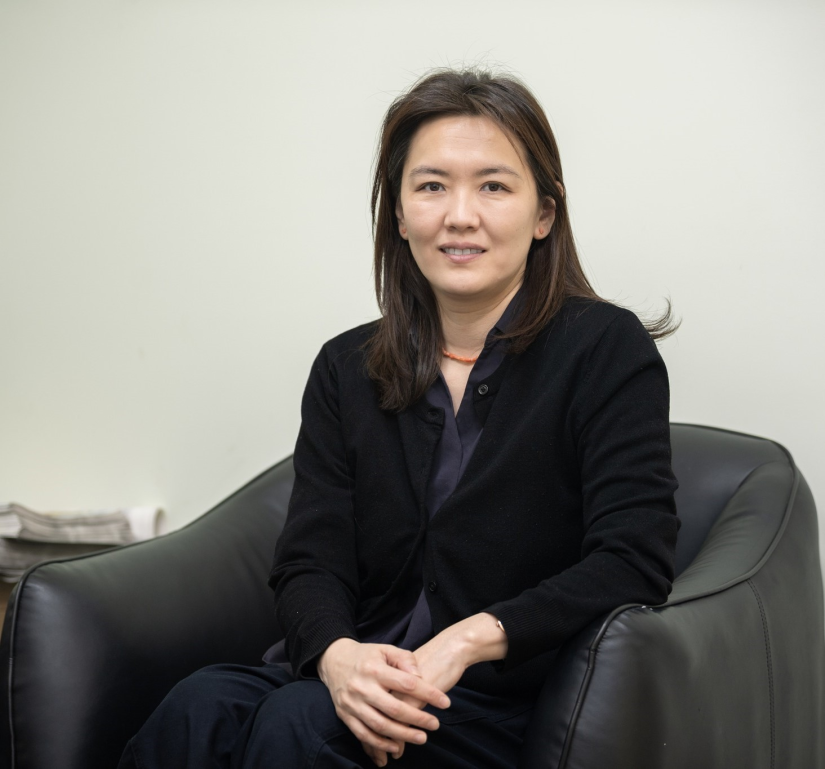
His granddaughter,
Tsetsentsolmon Baatarnaran, has followed in his footsteps, becoming an art
scholar. We spoke with her about her grandfather.
 What kind
of person was your grandfather within the family, beyond being the creator of
works cherished by the Mongolian people?
What kind
of person was your grandfather within the family, beyond being the creator of
works cherished by the Mongolian people?
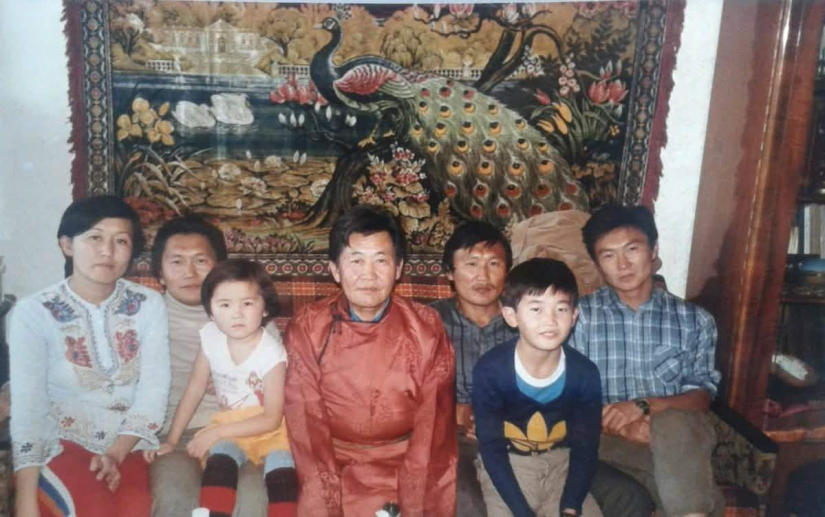
I lived with
my grandfather until he passed away in 1993. Looking back, I feel he devoted
all his time and energy to his creative work, scholarship, and research. He
didn’t constantly lecture his children and grandchildren; instead, he taught by
example. As a specialist in Mongolian linguistics and stylistics, he would
often correct our speech. For instance, if we said something like “very nice”
using an incorrect expression, he would explain why it was wrong and guide us
toward proper usage.
He also had a
playful sense of humor and enjoyed teasing jokes. He was extremely honest - he couldn’t
lie. If the phone rang and someone asked him to say they weren’t home, he would
say “not here,” hang up, and then feel genuinely troubled, even praying and
saying, “Oh my, making someone do such a bad thing.” He treated even small
children with great respect.
What was
the atmosphere like in his home?
My grandmother
still lives in what used to be my grandfather’s home. My grandfather’s
grandfather was the elder brother of Jalkhanz Khutagt Damdinbazar. As
descendants of the Khutagt, we preserve the family hearth, including parts of
the ger’s roof poles, a small wooden “old man” figure that was used in
childhood, and prayer beads. There are also some cultural relics and
collections, such as scriptures and religious artifacts.
 When you
look at his handwriting and notes, what comes to mind?
When you
look at his handwriting and notes, what comes to mind?
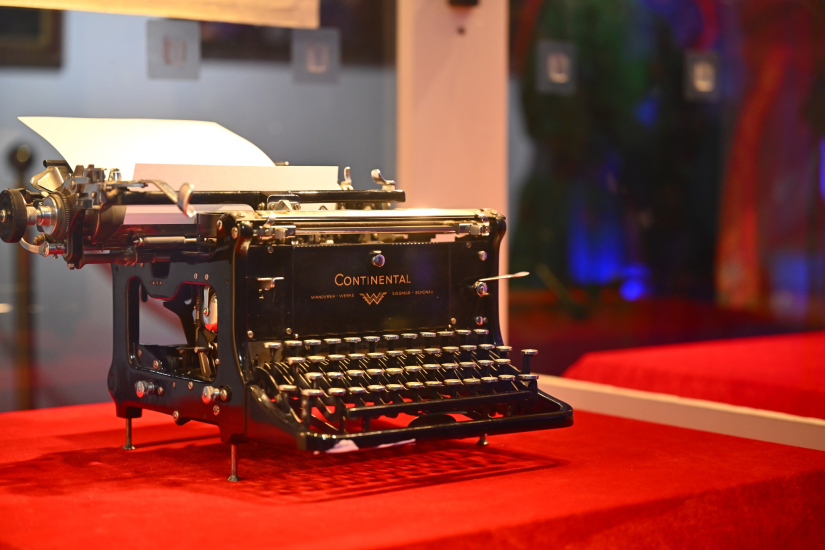
My grandfather
used to not only handwrite, but also make two to three copies using a
typewriter, and keep them. There is a huge amount of paper and archival
material in his home. There are also many invitations, posters, and tickets
from performances and concerts he attended at that time - all carefully
preserved. I think it would be very interesting to create an album from his
ticket collection to showcase the colors, styles, and designs of that era.
There are even printed notes with images saying things like, “Father asks you
to come home for tea,” as well as numerous invitations from various
organizations and factories asking him to give lectures on folk art and related
topics.
What is the
greatest legacy he left your family?
I would say
it’s a set of values. He believed in serving one’s country and pursuing goals
sincerely.
The idea of dedicating oneself to knowledge - not for personal gain or fame, but for the well-being of others - is what I consider the most valuable inheritance from him.
How did he
influence your worldview?
He would
constantly correct how we spoke our native language, making sure we used it
properly, and he always emphasized that we must learn the traditional Mongolian
script well. In the early 1990s, the words “Feature Film” would appear on TV in
Mongolian script. Even though I didn’t fully know the script, when I managed to
guess and read it, he would be so happy and praise me enthusiastically, saying,
“You can read it - how wonderful!” Later, I went on to study and specialize in
Mongolian script at Choijav Luvsanjav’s school.
He also
enrolled me in the Music and Dance School, hoping I would become a musicologist
and continue his work. He believed that a researcher must thoroughly understand
and master music. So, you could say he set me on the path to becoming a
researcher.
My grandfather
had an accordion at home and would occasionally play it. Perhaps he was
composing melodies and matching them with lyrics. He could play by reading
sheet music. When I had just started in the piano class and didn’t have an
instrument, I would lay his accordion flat and practice on it. In the evenings,
when my parents came home from work, one would hold it while the other pushed
and pulled the bellows to produce sound, and I would press the keys to
practice. It’s a very fond and joyful memory.
Also, the year I started school, my grandfather once asked if I would sing the song “Maamuu Naash Ir” at a concert. I refused, saying, “I won’t sing such a little children’s song,” and he scolded me, saying, “It’s wrong to reject a song when you haven’t even learned to sing one properly.” That stayed with me as a lesson.
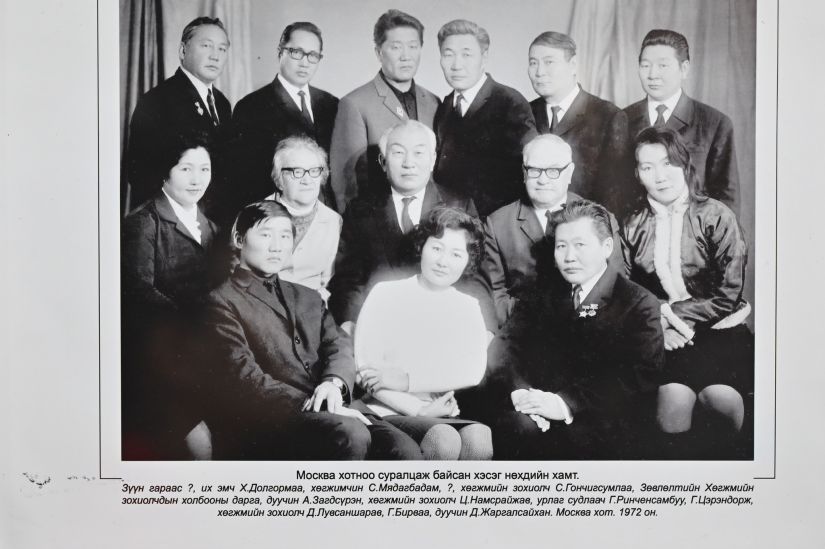
He had asked me because he intended for me to perform at a creative evening dedicated to “Luuvaa”—that is, Hero of Labor, People’s Artist, and composer Luvsansharav Dagva. By the way, this year also marks the 100th anniversary of Luvsansharav’s birth.
For you,
which of Badraa J.’s works has become even more valuable over time? He really
worked across many different fields, didn’t he?
Yes, he worked
in many areas such as music, art studies, and Mongolian linguistics. After the
social transition in the 1990s, national consciousness began to revive, and
people started to understand the importance of traditional culture, viewing it
as a core value and heritage of Mongolia. This led to efforts to have such
traditions registered on UNESCO’s Intangible Cultural Heritage list.
I believe my
grandfather laid the foundation for this revival starting from the 1980s. He
played a very important role in drawing people’s attention to traditional
culture and arts, and in guiding them toward folk and classical heritage. When
democracy emerged, and national consciousness and spirit were revitalized, he
had already prepared the ground for it. He recognized the importance of long
song (urtiin duu) and throat singing (khoomei), and did a great deal to revive
these traditions—which had been fading—and to reintroduce older cultural forms
to the public.
“When a
writer infuses their inner world - the sincere feelings hidden in their
‘suitcase’ - into their work, it lives on beyond time,” as Nobel Prize–winning
author Orhan Pamuk once said. Badraa Jamts created over 400 songs and was
highly successful in writing lyrics. In your view, what gives his songs their
power to reach and move people?
At that time, the genre of popular songs was developing actively, and it can be said that almost every composer and poet was writing songs. What distinguishes my grandfather’s lyrics is that, grounded in Eastern literary theory, he combined the characteristics of Mongolian traditional oral and written literature, linking tradition with innovation and creating new meanings of his own.
Because of this, his works are deep in meaning and beautifully expressive, which likely allowed them to resonate with people’s hearts. In terms of meaning, rather than being a short-term “hit,” I believe it is important to reintroduce those ideas to modern audiences.
That is also
the purpose of celebrating the 100th anniversary of his birth. It is not just
about remembering my grandfather or glorifying his name, but about helping
people feel a heartfelt connection to their homeland, purifying their emotions,
and fostering national unity and consciousness.
Recently, our
students made an interesting observation: nowadays people don’t seem to love
deeply and sincerely for long periods as before - they fall in love quickly and
just as quickly grow tired of it, and songs and poetry reflect this change. In
the past, sincere love was seen as something precious, as something experienced
only once in a lifetime, and it was expressed that way in songs. We aim to reintroduce
that worldview to modern people as well.
Additionally, his lyrics were simple and easy to sing along with, which likely helped them spread among people, almost like folk songs.
The People’s Artist of Mongolia and composer Khayankhyarvaa P. once recalled, “‘Khaluun Elgen Nutag’ has very simple lyrics and melody – anyone can memorize and sing it right away. After writing the lyrics, Badraa said, ‘This song of mine will go far – just wait and see.’ At the time, some professionals thought the words and melody were too simple and wouldn’t go very far.”
Indeed,
lines like “Bound to the liver and heart,
My tender
Mongolian homeland,
Granted
by my parents,
My precious golden cradle…” - though simple - speaks directly to the soul of Mongolians. People sing this song almost as a tradition at every proud and significant occasion. Even the phrase “The eternal snow-capped mountains are smiling” seems to carry deep meaning and a sense of joy and pride. In general, could you share more about the “innovation” he created by combining Eastern theory with Mongolian folk oral literature?
Because he had
a vast knowledge of the Mongolian language, he revived old words and
reintroduced them into usage. He also compiled and published a dictionary of
musical terminology. In that dictionary, he coined and translated many of the Mongolian
musical terms we use today, such as “piano,” “violin,” and “opera.” At times,
he was even criticized for using archaic vocabulary and was once dismissed from
his job because of it.
Even the
term "yazguur urlag" (traditional folk art) for folk art has now become widely established.
At that time, did he face social difficulties while conducting his research on
traditional art, and how did he overcome them? In general, which forms of folk
art did he most wish to preserve?
Only now do we
talk about how people were labeled as “nationalists” and discriminated against.
From his biography, you can see that every 2–3 years, he would be dismissed
from his job and left unemployed, moving between many institutions. However,
during those periods without work, he translated operas and films. In a way,
that gave him the freedom to create many works.
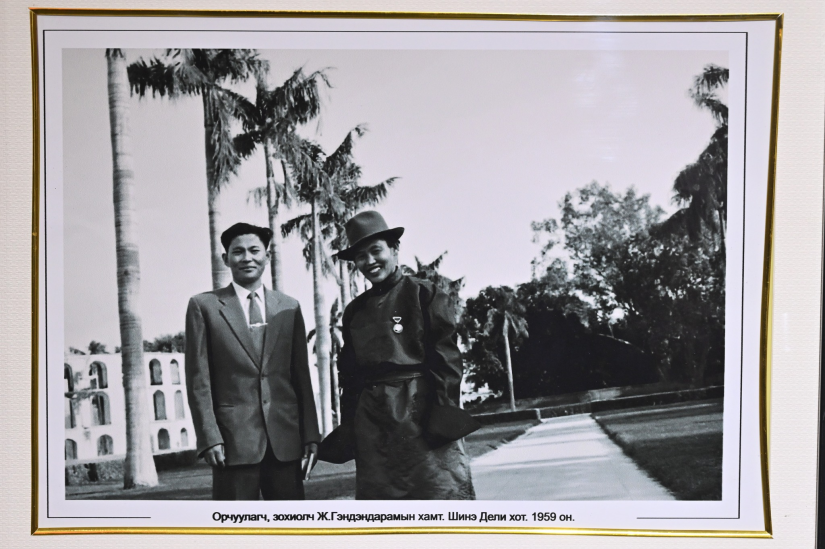
He himself had
been brought back from India and was assigned to live in Khovd. Yet he never
spoke of it as repression or political persecution caused by society; rather,
he would say it was due to the actions of certain individuals. In fact, those
years and moments now seem like a kind of fate that allowed him to leave behind
the remarkable works that have been passed down to us today.
According
to how you describe him, it sounds like he was a positive person.
He was an outspoken, passionate, bold person. When he was assigned to Khovd aimag, a party official told him to work well. He responded, “I am not capable of working otherwise.”
What can
you say about his influence and innovation in music?
My grandfather’s
main focus of research was traditional musical culture and folk epistemology. What had previously been narrowly
understood as limited to oral literature, he sought to expand - proposing, for
example, that throat singing (khoomei) and long song (urtiin duu) be included
within the category of “traditional professional classical music,” and
introducing the concept of “root art” (yazguur urlag).
He also aimed to move away from Eurocentric
perspectives and made attempts to analyze traditional musical works based on
their historical development, form, function, and structure, organizing and
systematizing them. In that sense, his work represented a significant
advancement for its time. Of course, modern theoretical approaches are somewhat
different, and there are many angles today from which his ideas can be further
examined and discussed.
What kind of lifestyle habits or
philosophy did Badraa Jamts have?
He was a very disciplined person with his own rules and structure. He didn’t live chaotically or stay up day and night without order - he had a well-balanced routine. He would wake up in the morning, exercise, and recite prayers. After drinking tea, he would work through the morning, then have lunch, and so on - he was very organized in his personal life. From the letters I mentioned earlier, I’ve come to newly understand what he was thinking and striving for. Once he set his mind on something, he would pursue it tirelessly and write persistently about it.
There is even a letter where he proposed forming a joint team with Soviet and British musicologists to conduct ethnomusicological field research. In it, he writes that the top leadership of his institution was not supporting the initiative and was causing delays, so he suggested reaching out to international organizations - even writing to UNESCO. It shows how, once he committed to an idea, he would become almost “obsessed” with it and push forward relentlessly until he saw results.
In the
digital age, how do you think the role of researchers has changed in promoting
Mongolia’s cultural identity to the world?
Back then,
communication was quite limited compared to today. My grandfather corresponded
with many people through letters, and we are now preparing to compile and
publish them. He had even made notes on each letter—for example, “I received
your letter from September two months later, in November,” and so on. Despite
the slow communication of that time, he managed to reach and collaborate with
many people and places.
When
communicating with foreign scholars, he would write things like, “Please send
me that researcher’s book or photographs on a certain topic, or mention
conferences being held abroad that he wished to attend. He had a very keen
sense of global research trends related to his work. Most of the letters were
about requesting books - sharing information about newly published works and
asking if they could be obtained and sent. Today, in contrast, researchers have
far greater opportunities to work much faster.
 How do you
think the legacy he left should be developed by the next generation?
How do you
think the legacy he left should be developed by the next generation?
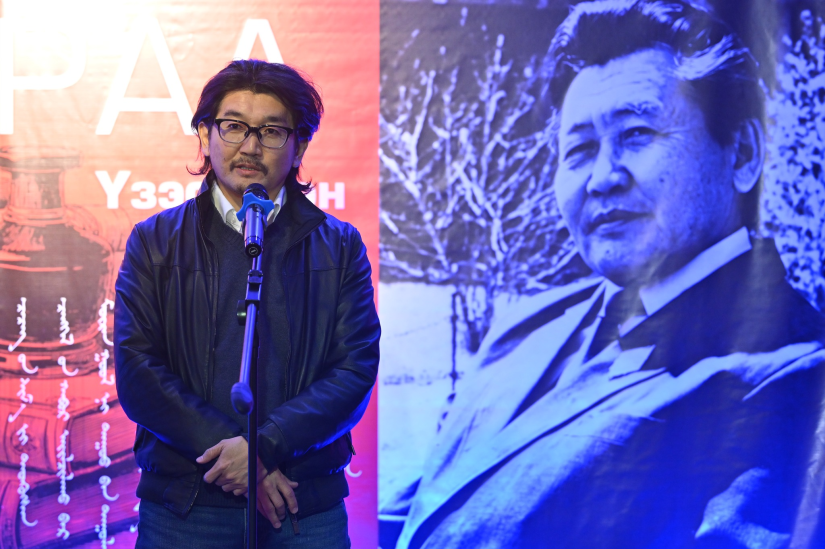
A conference
marking the 100th anniversary of my grandfather’s birth has been held, and new
researchers are studying his work across various fields such as documentary
film, screenwriting, film literature, language and editing, poetry, and
translation. Since I work in cultural studies, I believe that rather than
simply repeating his ideas or what he himself said, it is important to evaluate
and assess the impact of his work from the perspective of contemporary
theoretical thinking.
Instead of
merely commemorating the 100th anniversary with remembrance and praise, it is
more meaningful to analyze his work through modern theoretical frameworks and
to objectively assess what kind of innovations he brought and what impact he made.
What is the
most interesting fact about him that people don’t usually know?
Because he
worked in so many different fields, one could say his efforts were somewhat
dispersed. In the 1950s, while working as a translator at the Film Studio, the
studio even submitted a request to the Academy of Sciences for him to pursue
doctoral studies on a comparative study of Russian and Mongolian verbs.
However, due to the circumstances of the time, his work situation changed, and
that plan did not materialize.
Although he is
regarded as a scholar and researcher, my grandfather did not hold an academic
degree. He had been writing a book titled “Mongolian Folk Music,” but because
he was constantly traveling across 18 aimags for folk arts festivals, folk
music research, and working on television programs and documentaries such as “Ingen
Egshig,” “Khuumii,” and “Urtiin Duu,” his writing progress was delayed, and he
only managed to complete three chapters. After his passing, his children
compiled the remaining two chapters and published the book.
Since he was
working across many directions and on such a broad scope, it seems he often did
not have enough uninterrupted time to focus deeply on a single project.
Additionally,
shortly after Mongolia established diplomatic relations with the United States
in 1987, with support from the U.S. Asia Foundation, a folk music ensemble he
was involved with toured 11 cities in the United States, giving lectures and
concerts to introduce Mongolian traditional culture. They also gave radio
interviews and were featured in newspapers and magazines. In Taiwan as well, he
promoted Mongolian traditional arts, and even personally performed a long song
(urtiin duu) which was recorded for radio broadcast.
I remember that
the trip to America lasted quite a long time. Because I was still a child, I
thought my grandfather had gone to a very dangerous place, and it was not
certain whether he would return alive, so I used to cry. We had a collection of
Danish cartoonist Herluf Bidstrup at home. In those cartoons, American
capitalists were often portrayed as cruel and harsh, and I think that may have
influenced my fears and worries at the time.
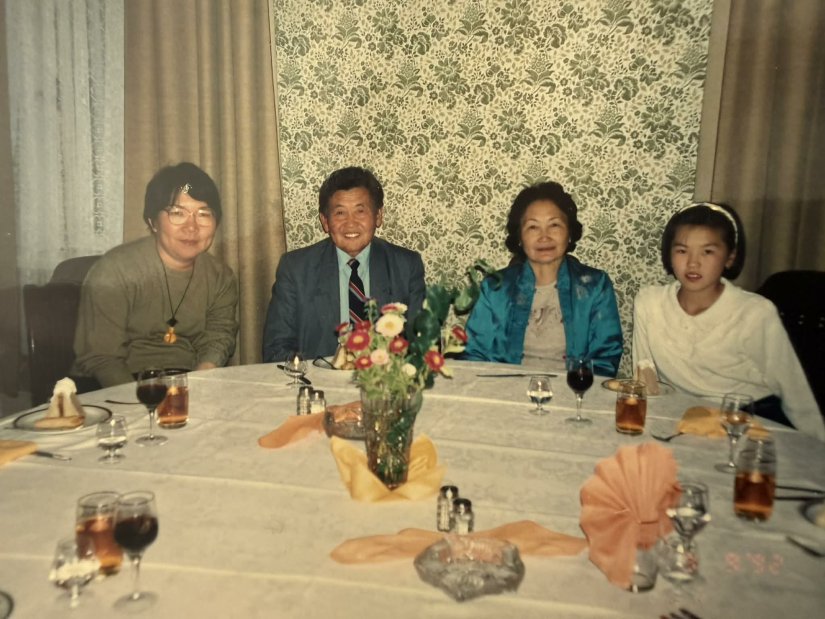
In addition, in
the early 1990s, to study and promote traditional music, he established an NGO
called “Khuur Magnai.” Within it, he formed an ensemble called “Ertnii Saikhan”
consisting of senior artists, and another group called “Tumen Ekh” ensemble made
up of younger performers.
When I think
about it, my grandfather was not only a poet, translator, and researcher, but
also a highly capable organizer who had a deep understanding of the social
transition of his time.