



Mongolian Saiga Population Recovers to 28,000
Environment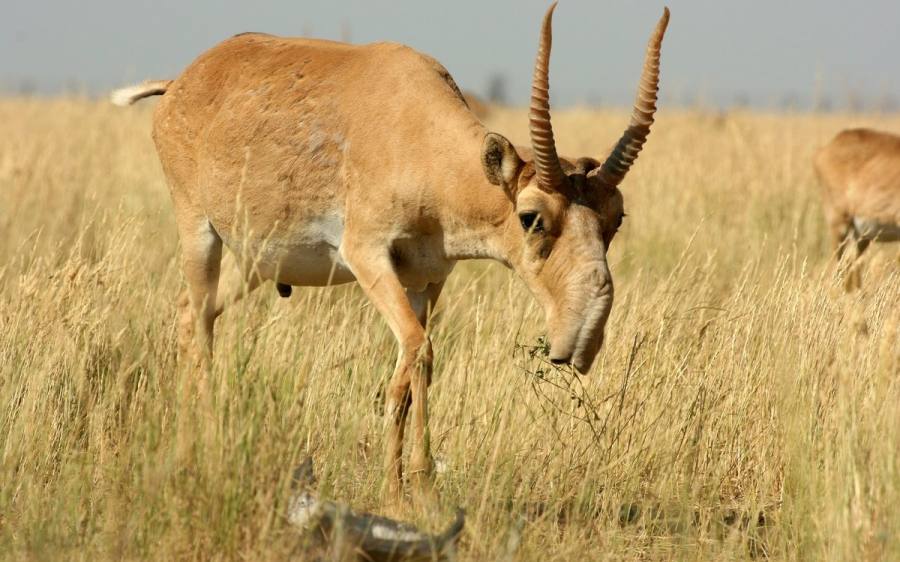
Yesunbulag, April 24, 2026 /MONTSAME/. April 23 is observed annually as Mongolian Saiga Conservation Day. To mark the occasion, the Environment Department of Gobi-Altai aimag organizes public awareness, educational, and outreach activities aimed at promoting knowledge of the Mongolian saiga, encouraging pride in the species, and supporting its protection.
These
activities include working with members of Eco Club student groups to protect
spring water sources, installing automatic cameras to monitor saiga movement,
introducing relevant legislation to local residents, and advising herders on
rotational pasture use.
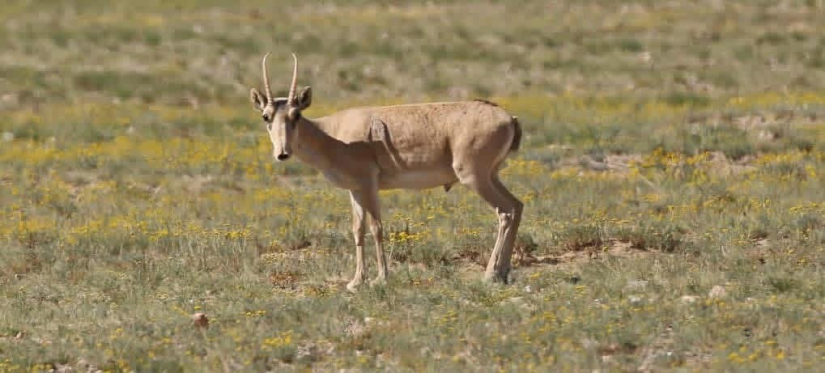
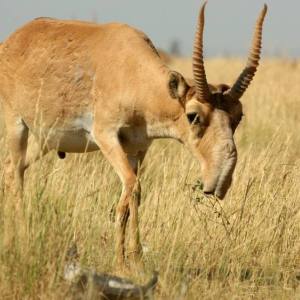
The Mongolian saiga is listed in Mongolia’s Red Book and classified as a critically rare species under the Law on Fauna (1995).
Around 70 to 80 percent of the species’ range in Mongolia is located in Gobi-Altai aimag. The animal is found only in Gobi-Altai, Khovd, and Uvs aimags, with its core population distributed across Sharga, Darvi, Khukhmorit, Bayan-Uul, Tonkhil, Tugrug, and Khaliun soums, as well as the Bigeriin Khooloi in Gobi-Altai.
According to Batmagnai D, Head of the Environment Department of the aimag, the Mongolian saiga population and habitat expanded significantly over the past decade, reaching 14,000 animals in 2014, while its range increased by 13 percent.
However, 53 percent of the population was lost in late 2016 due to an outbreak of peste des petits ruminants, and only about 3,000 animals were counted in autumn 2017. The population has since recovered to around 28,000, he said.
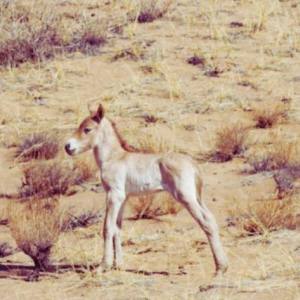
The Mongolian saiga is regarded as the only critically rare animal to have preserved its ancient characteristics. It has survived in Mongolia since the Ice Age. It feeds on around 30 species of plants, including feather grass, wild onion, shrubs, and wormwood found in the Gobi region. Its distinctive bulbous nose helps warm and filter cold air before it reaches the lungs while running.
As a herd animal, the saiga also plays an ecological role by cycling vegetation, loosening soil through trampling, and fertilizing gobi-steppe land, helping improve plant productivity.