



'White Gold' Movement Enables Domestic Producers to Supply About 70 Percent of Raw Materials
Politics

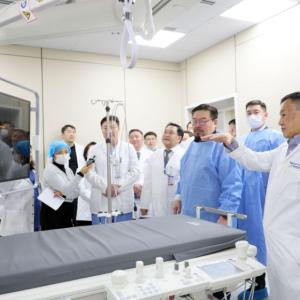
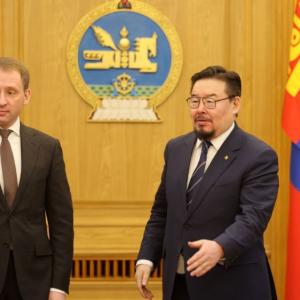
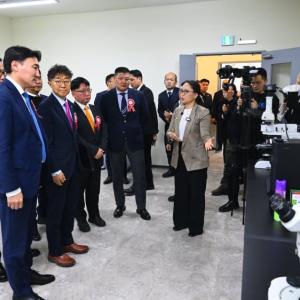
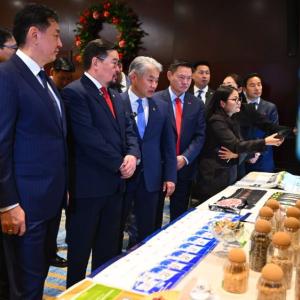
Ulaanbaatar, December 17, 2025 /MONTSAME/. President of Mongolia Khurelsukh Ukhnaa visited national enterprises operating in the light industry sector within the framework of the “White Gold” national movement.
The President first visited “Tod Oims” LLC, established in 2011 and employing more than 200 people. The company has the capacity to procure 1,000 tons of raw wool annually, produce 200 tons of yarn, and manufacture 10 million pairs of socks per year. Raw materials collected directly from herders are processed through 12 stages into finished products, which are sold through 16 domestic outlets and exported to 16 countries, including Russia, Kazakhstan, the Republic of Korea, Japan, the United States, Germany, and France. Within the framework of the “White Gold” Program, the company obtained MNT 4.2 billion in working capital loans, enabling it to stockpile raw materials and expand production.
“White Gold” Increases Capacity of “Goyol Cashmere” LLC by 30 Percent
“Goyol Cashmere” LLC has been producing wool and cashmere knitwear, sewn, woven, and quilted products since 2005. The company has a daily production capacity of 500 to 1,000 items and employs more than 200 people. It operates 10 retail outlets and exports its products to more than 20 countries. Within the framework of the “White Gold” movement, the company received MNT 24 billion in working capital and investment loans, which allowed it to expand its production capacity. For example, while it procured 26.8 tons of raw materials in 2024, this figure increased to 81.5 tons this year. During the same period, equipment capacity, production volume, and export sales revenue each increased by 30 percent, while employment rose by 25 percent. In addition to its core production, “Goyol Cashmere” LLC produces compost fertilizer from food waste, with one ton of fertilizer reducing up to 3,000 tons of carbon dioxide emissions.
Business leaders expressed appreciation for the policy and financial support provided by the Government under the “White Gold” movement and emphasized the importance of consistently continuing the program, particularly by constructing as many spinning factories as possible. This, they noted, would strengthen the foundation for fully processing wool and cashmere domestically and producing value-added products. As a result, exports and foreign currency earnings would increase, the incomes of herders and raw material suppliers would rise, and the global value and reputation of Mongolian cashmere would be further reinforced.
President Khurelsukh expressed gratitude to enterprises and wealth creators who cooperate with herders and suppliers, create jobs, supply value-added products to domestic and foreign markets, and fulfill their tax obligations. As a result of the “White Gold” movement, 6,000 tons of cashmere have been procured, marking the first time that approximately 70 percent of raw materials have been supplied domestically.
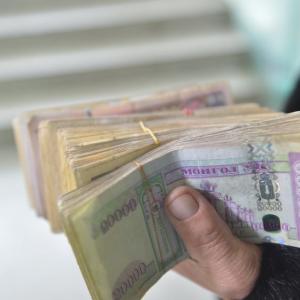
As of December 15, 2025, a total of MNT 493 billion in working capital and investment loans has been extended to enterprises to support operations and expand capacity in the processing of wool, cashmere, hides, and skins. As a result, spinning capacity increased by 400 tons to exceed 2,000 tons, while knitting capacity rose by 200,000 units. In 2023, Mongolia exported cashmere and cashmere products worth USD 440 million. Under the “White Gold," exports of combed cashmere have increased fivefold.
The “White Gold” will be implemented from 2024 to 2028. Through the program, the level of full cashmere processing is expected to increase from the current 20 percent to 40 percent, production to rise from MNT 1.5 trillion to MNT 2.3 trillion, exports to grow from USD 398 million to USD 690 million, and more than 3,000 new jobs to be created.
In addition, the wool processing rate is projected to increase from 25 percent to 55 percent, production from MNT 240 billion to MNT 670 billion, exports from USD 52 million to USD 119 million, and approximately 2,200 new jobs are to be created. The processing rate of hides and skins is expected to rise from the current 30 percent to 50 percent, sales to increase from MNT 57.8 billion to MNT 900 billion, exports from USD 9.6 million to USD 22 million, and more than 3,000 new jobs to be created. Overall, more than 8,000 new jobs will be generated, while exports of livestock-origin raw materials are projected to double and reach approximately USD 800 million.