 Ulaanbaatar





MONTSAME Names 10 Major Events in Mongolia in 2025
Society
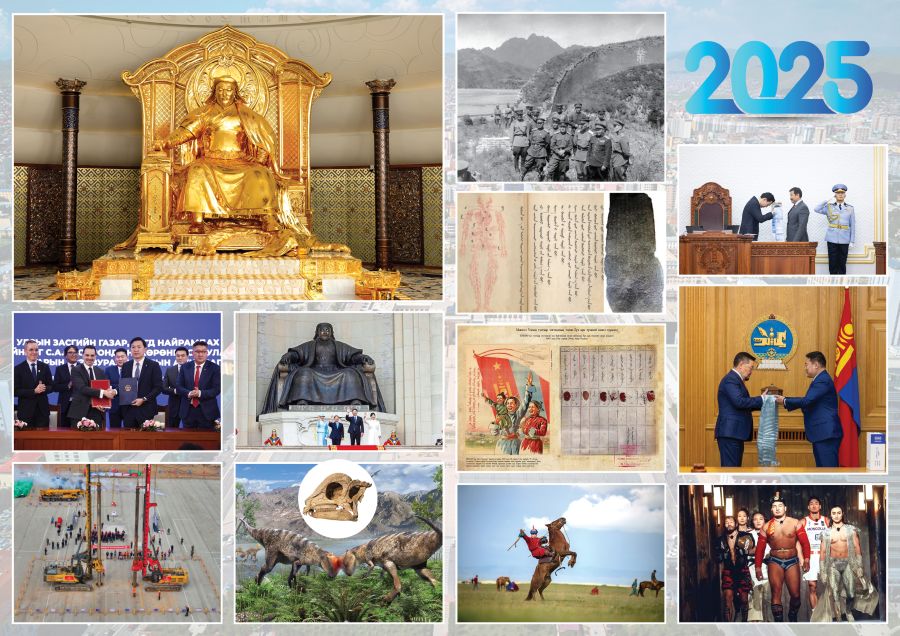
Ulaanbaatar, December 24, 2025 /MONTSAME/. MONTSAME Mongolian National News Agency is naming the 10 major events that unfolded in Mongolia in 2025 as the year draws to a close.
1. The Golden Statue of Chinggis Khaan Enshrined

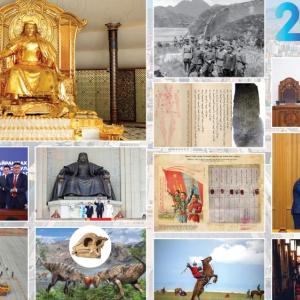
On March 1, 2025, or the starting day of the spring of the Year of the Snake, the Golden Statue of the Great Chinggis Khaan, the Sacred White Banner, and the Golden State Seal of the Mongol Empire Khasbuu were enshrined in the Great Khaan’s Urgoo [The Royal Chamber] at the Chinggis Khaan National Museum of Mongolia.
While it was previously a tradition for high-ranking state officials to begin the state greeting ceremony by paying respects to the Nine White Banners, the symbol of the suld and khiirmori, at the State Palace, a new tradition has been established starting from 2025 to hold this ceremony at the Palace of the Great Chinggis Khaan.
The seven-meter-high gilded statue depicts the Great Khaan in his youth, seated at the place of honor in his palace after founding the Great Mongol Empire.
Based on the vision and knowledge of Mongolian scholars and built by Mongolian artists during the most difficult period of the pandemic, the "Chinggis Khaan" National Museum stands as the largest cultural development in the country over the last 30 years. It has become the most comprehensive museum showcasing 2,000 years of Mongolian state history and the impact of nomadic civilization on the modern world.
Chinggis Khaan, the founder of the Mongol Empire, was honored by The Washington Post as the "Man of the Millennium" in 1996.
2. Record Number of High-Level State Visits

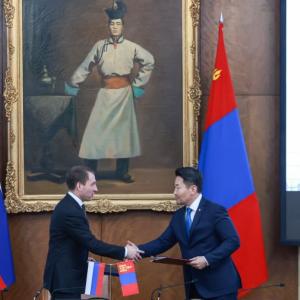
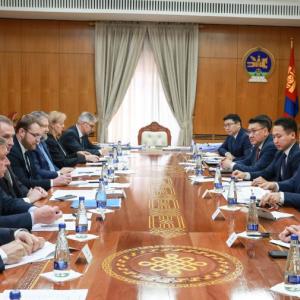
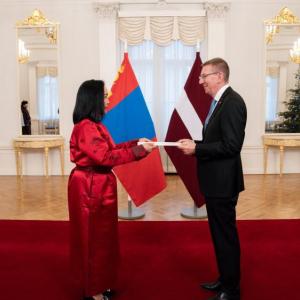
Mongolia's foreign relations have expanded significantly in recent years, with the number and frequency of visits continuing to rise. The year 2025 became a historic one, featuring 16 high-level state visits and events. these activities consolidated the achievements of previous years, expanded the scope of cooperation, and ensured a balanced foreign policy.
Mongolia welcomed several distinguished guests to the country:
Alexander Van der Bellen, President of the Republic of Austria
Serdar Berdimuhamedov, President of Turkmenistan
Shavkat Mirziyoyev, President of the Republic of Uzbekistan
Their Majesties Emperor Naruhito and Empress Masako of Japan
Samantha Mostyn, Governor-General of the Commonwealth of Australia
President Khurelsukh Ukhnaa conducted state visits to the Republic of Türkiye, the Czech Republic, the Republic of Poland, the Kyrgyz Republic, the Republic of Tajikistan, the Republic of India, the Italian Republic, and the Holy See.
In addition, President Khurelsukh participated in the 80th Session of the United Nations General Assembly, attended the 80th Anniversary of Victory in the Great Patriotic War in Moscow at the invitation of President Vladimir V. Putin of the Russian Federation, and took part as an observer in the Expanded Meeting of the Council of Heads of State of the Shanghai Cooperation Organization held in Tianjin, China.
Furthermore, on July 4, 2025, the State Great Khural approved resolutions establishing diplomatic relations with the Kingdom of Eswatini, Barbados, the Republic of Trinidad and Tobago, and the Republic of Botswana, thereby fully accomplishing Mongolia’s goal of establishing diplomatic relations with all member states of the United Nations.
3. Historic Anniversaries Marking International Recognition of Mongolia’s Independence
A chain of historic events in 1945, which remains prominently recorded in the history of the 20th century – the Yalta Conference, the War of Liberation, and the Independence Referendum – laid the foundation for the international recognition of the sovereignty of the modern Mongolian state. The 80th anniversaries of these landmark events were commemorated in 2025.

During the Yalta Conference held in February 1945, at the proposal of the Soviet Union, the status quo of the Mongolian People's Republic (MPR) within its existing borders was recognized. This agreement confirmed Mongolia's international legal independence from its southern neighbor, the Republic of China.
The Liberation War of 1945 contributed immensely to securing and gaining international recognition for Mongolia’s independence. More than 23,000 soldiers of the Mongolian People’s Revolutionary Army, alongside Soviet troops, traversed over 1,000 kilometers of challenging terrain to participate in the conflict.

Shortly after the war, on October 20, 1945, a nationwide referendum was held in the then Mongolian People’s Republic, in which the Mongolian people voted 100 percent in favor of independence. This outcome was officially recognized by the Soviet Union (Russian Federation) and the Republic of China (People’s Republic of China).

As a result of these developments, Mongolia was admitted to the United Nations in 1961, achieving full recognition within the international community.
4. Uchral Nyam-Osor Elected Speaker of the State Great Khural; Zandanshatar Gombojav Forms New Government as 34th Prime Minister
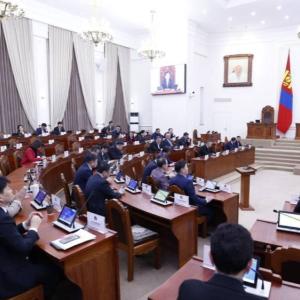
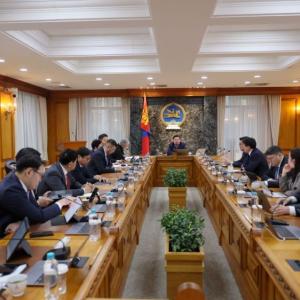
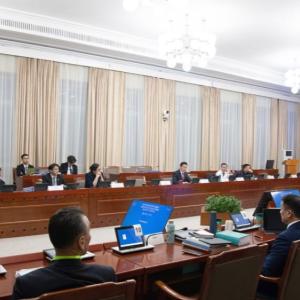
In 2025, Uchral Nyam-Osor, elected Chairman of the ruling Mongolian People’s Party, was chosen as Speaker of the State Great Khural. He stated that parliamentary activities would be directed toward comprehensive legal reforms aimed at safeguarding Mongolia’s economic independence and freedom.

Following the State Great Khural’s decision to pass a vote of no confidence in then Prime Minister Luvsannamsrain Oyun-Erdene, Gombojavyn Zandanshatar was appointed the 34th Prime Minister of Mongolia on June 13, 2025, and subsequently formed a new Government.

Having previously served as Member of Parliament, Minister of Foreign Affairs, Speaker of Parliament, and Chief of the Presidential Office, Prime Minister Zandanshatar declared that his Government would further strengthen Mongolia’s growing international standing. Under the motto “Digital First,” the Government committed to prioritizing digital transformation and adopting data-driven decision-making as its core policy approach.
5. Agreement Signed for Uranium Project with Orano Group and Gashuunsukhait-Gantsmod Border Connection Resolved

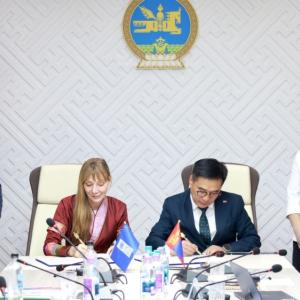
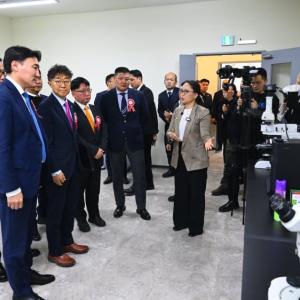
On January 17, 2025, the Government of Mongolia and France’s “Orano Mining SAS” signed an Investment Agreement to bring the “Zuuvch-Ovoo” uranium project into economic circulation.
Located in Ulaanbadrakh soum, Dornogobi aimag, the project represents Mongolia’s second major investment agreement with a third neighbor country, following the Oyu Tolgoi project. Construction is scheduled to begin in 2026, with the mine commencing primary extraction and producing its first output in October 2028. Once operating at full capacity, the facility is expected to produce 2,500 tons annually and 68.9 thousand tons of uranium yellowcake in total.
Furthermore, on February 14, 2025, Mongolia and the Government of the People’s Republic of China signed the Intergovernmental Agreement on Cross-Border Railway Connectivity at the Gashuunsukhait–Gantsmod Border Crossing, Coal Trade, and Expansion of the Tavantolgoi Coal Mine’s Production Capacity, marking the official launch of construction.

The project is set to double Mongolia’s border crossing capacity and increase annual coal exports to an average of 165 million tons. It also establishes the conditions for phased railway connections at the Shiveekhuren–Sekhee, Bichigt–Zuunkhatavch, and Khangi–Mandal border crossings.
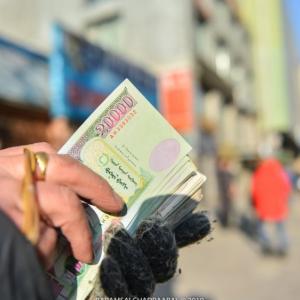
6. S&P Global Ratings: Mongolia’s Credit Rating Reaches 13-Year High

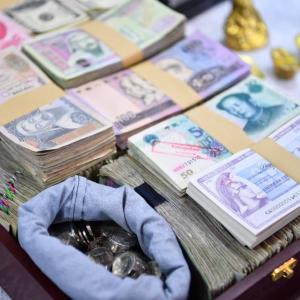
Record-Breaking Foreign Exchange Reserves. In addition to the rating upgrades, as of December 2, 2025, Mongolia’s foreign exchange reserves reached an all-time high of USD 6 billion.
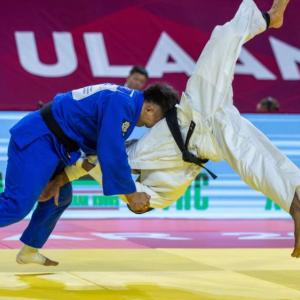
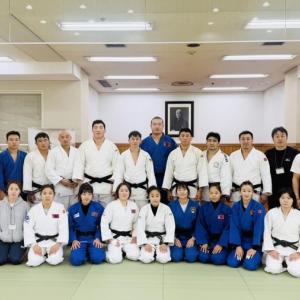
7. A Year of Promoting Mongolia Through Sporting Achievements
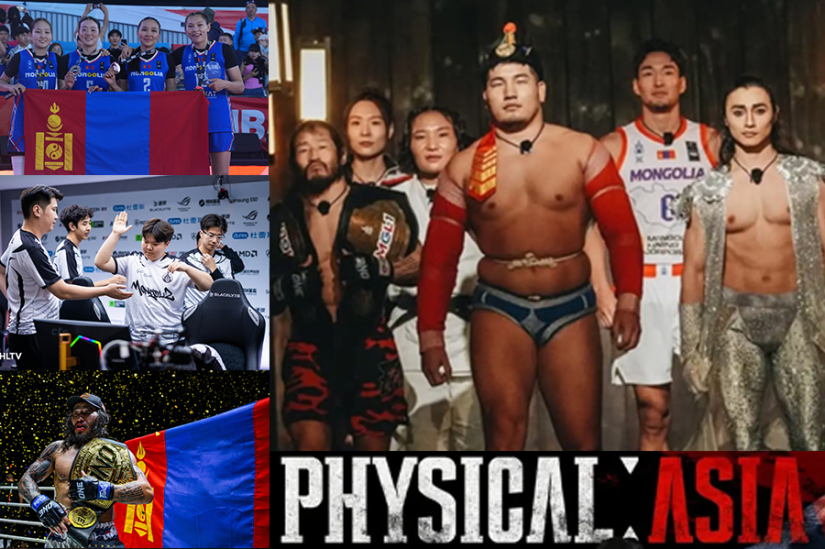
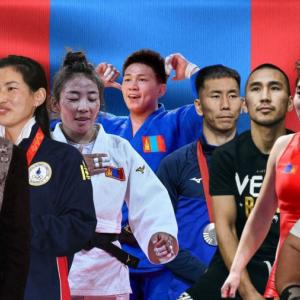
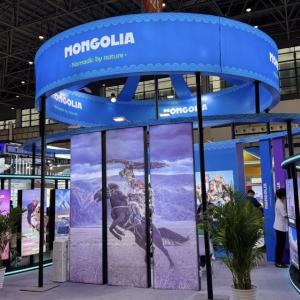
As Mongolia welcomes a record of more than 820,000 tourists in 2025, the country is concluding a year in which it has been successfully promoted internationally, with the contribution of the sports sector playing a particularly significant role.
The Netflix show "Physical: Asia," which introduced Mongolia from a new angle, led in viewership in 46 countries and is conquering millions of viewers worldwide. Since the strength, endurance, talent, unity, and unique character of Mongolians are leaving a positive impression on viewers in many countries and opening the opportunity to recognize Mongolia from a new perspective, the team of the above project has decided to cooperate with Mongolian team athletes in the direction of developing tourism.
Enkh-Orgil Baatarkhuu, a participant in the show, was crowned the first champion of the Asian "One Championship" association in the last 11 years of Mongolian mixed martial arts history.
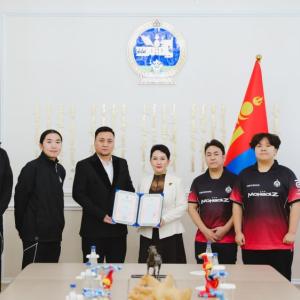
Mongolia organized the adult 3x3 Basketball World Cup for the first time, and our women’s team performed skillfully, highly ranked, and with spirited play on their home court to win the silver medal. In addition to this, in the world of esports, "The MongolZ" team not only led the world rankings for the first time but also won the World Cup competition held in Riyadh, Saudi Arabia, for the first time.
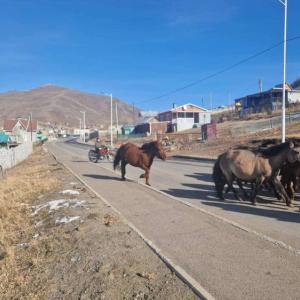
8. The World Horse Day Initiated by Mongolia, was Celebrated for the First Time
World Horse Day was celebrated for the first time on July 11th. The resolution "On World Horse Day" initiated by Mongolia was discussed and approved at the Plenary Meeting of the 79th session of the UN General Assembly on June 3, 2025.

As a nomadic and horse-riding nation that has preserved its horse culture and traditions, the President of Mongolia initiated the draft resolution of the UN General Assembly to observe July 11 of each year as World Horse Day to draw global attention, increase public knowledge, information, and participation regarding the issue that the number of horses, breeds, and economic use are tending to decrease worldwide.
56 countries joined as co-authors of the resolution "On World Horse Day." According to the UN FAO, there are more than 57 million horses for riding and use in the world.
9. “Inscription of Khuis Tolgoi” and “A Complete Record of the Body by Imperial Order” Registered with UNESCO

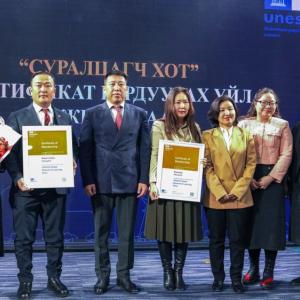
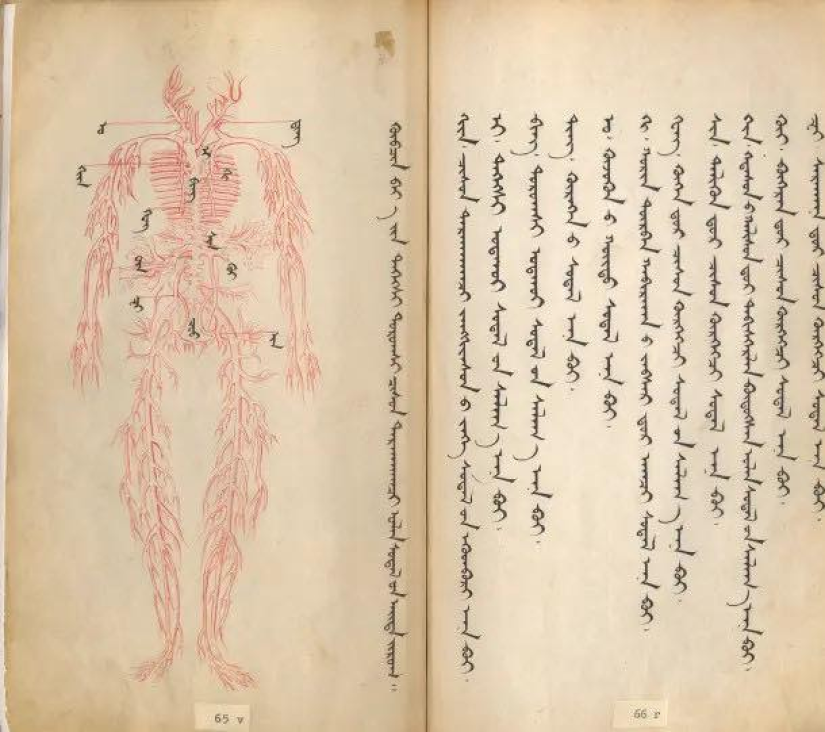
At the 221st session of the UNESCO Executive Board, held in Paris, French Republic, from April 2 to 17, 2025, the ancient Mongolian script monuments “Inscription of Khuis Tolgoi” and “A Complete Record of the Body by Imperial Order,” nominated by Mongolia, were officially inscribed on the Memory of the World International Register under UNESCO’s Memory of the World Programme.
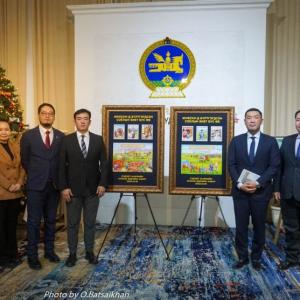
Before this, Mongolia had registered five documentary heritage items on the list: Lu. “Altan Tobchi”, Sakhiusan Dara Ekh, the woodblock prints of the "Merged Garakhyn Oron" (Towards Attaining Wisdom), “Family Chart of Hereditary Lords of the Khalkha Mongols”, and Mongolia’s first postage stamp, "Eldev-Ochir."
The “Inscription of Khuis Tolgoi”, dated to around AD 601, consists of 100 words written in 215 characters of the Ancient Mongolian Language using the Brahmi Script, and it is currently recognized as the earliest known monument of the Mongolian language. Meanwhile, the “A Complete Record of the Body by Imperial Order” is a mid-18th-century handwritten work on Western and Eastern traditional medicine, serving as a valuable document that attests to Mongolians’ early and extensive knowledge of human anatomy and their distinctive medical terminology.
It is also noteworthy that Mongolia was elected for the first time as a member of the UNESCO World Heritage Committee at the election held in Paris on November 24, 2025.
10. Fossil Remains of Dome-Headed Dinosaur Draw Global Paleontological Interest
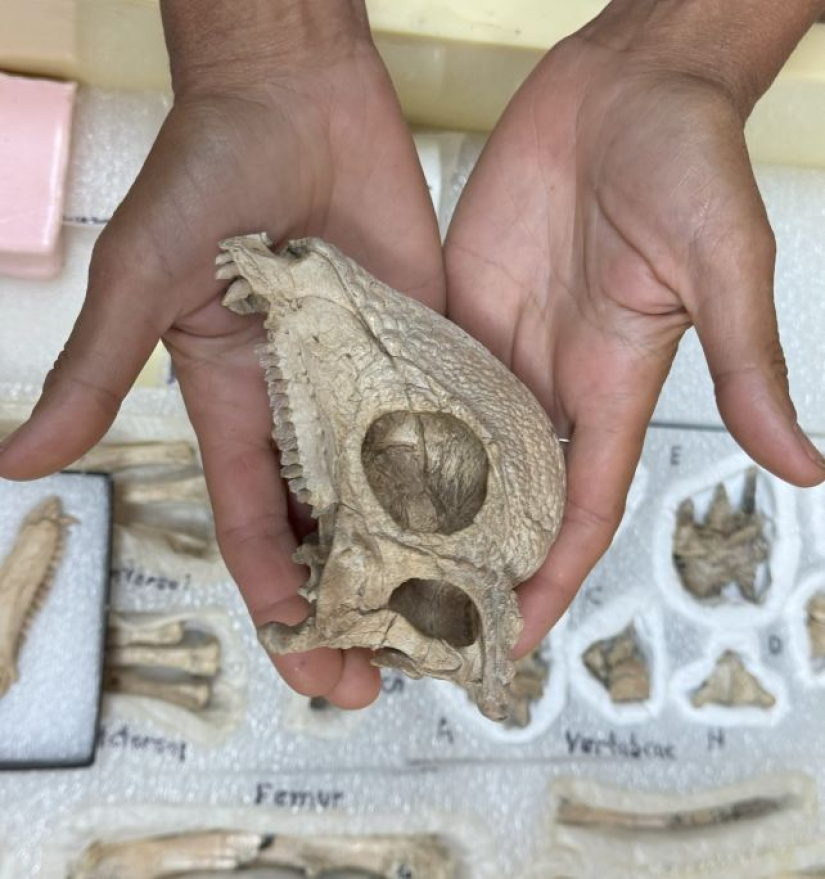
As a result of a joint field study conducted by researchers from the Institute of Paleontology of the Mongolian Academy of Sciences and North Carolina State University, United States, a remarkable discovery was made at the “Khuren Dukh” formation, where rock formations dating back to the Early Cretaceous period, approximately 108-115 million years ago, are distributed. The research findings are now drawing the attention of dinosaur enthusiasts and paleontologists worldwide.
The fossil, measuring approximately 80 cm in length and weighing 5.85 kilograms, belongs to an herbivorous dome-headed dinosaur and is regarded as the most complete specimen among dome-headed dinosaurs recorded in paleontological science to date. As one of the rarest dinosaurs in the world, the newly discovered specimen has been scientifically registered under the name Zavacephale Rinpoche, a compound meaning “the first dome-headed” and “rare, precious.”
The research findings were published on September 17, 2025, in the issue of Nature, one of the world’s most prestigious scientific journals (impact factor: 50).