 Улаанбаатар





MONTSAME Names 10 Major Global Events of 2025
Society
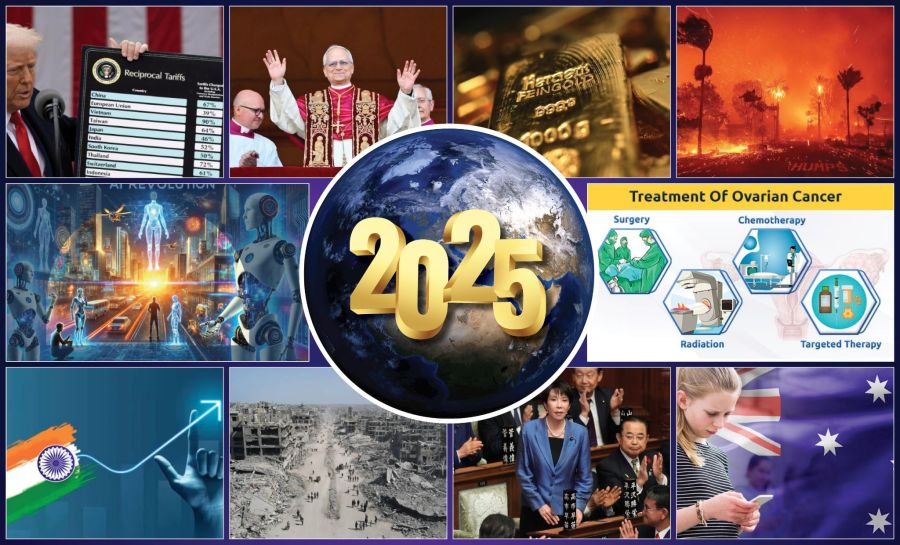
Ulaanbaatar, December 24, 2025 /MONTSAME/. MONTSAME Mongolian National News Agency is naming the 10 major events that unfolded around the world in 2025 as the year draws to a close.
1. Trump’s Inauguration, Tariff Shock, and the Russia–Ukraine War
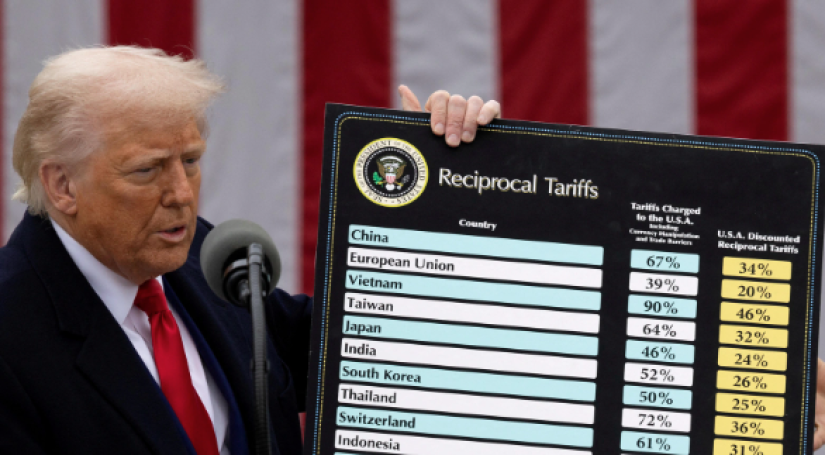 Republican candidate Donald Trump was sworn in
as the 47th President of the United States, officially assuming office for his
second term. One of the most closely watched moves at the outset of his
presidency was the sharp increase in import tariffs imposed by the United
States. The new tariff policy broadly affected nearly all U.S. trading
partners. To date, more than ten countries have concluded new trade agreements
with the U.S.
Republican candidate Donald Trump was sworn in
as the 47th President of the United States, officially assuming office for his
second term. One of the most closely watched moves at the outset of his
presidency was the sharp increase in import tariffs imposed by the United
States. The new tariff policy broadly affected nearly all U.S. trading
partners. To date, more than ten countries have concluded new trade agreements
with the U.S.
President Trump had also pledged to bring an end to the Russia–Ukraine war immediately after being elected. In this context, the leaders of the United States and Russia met in August for the first time since 2021, with Donald Trump and Vladimir Putin holding talks on resolving the Ukraine crisis.
The Trump administration has additionally unveiled a new 28-point plan aimed at ending the war. The proposal is currently under discussion by the relevant parties.
2. An American Citizen Elected as Head of the
Catholic Church
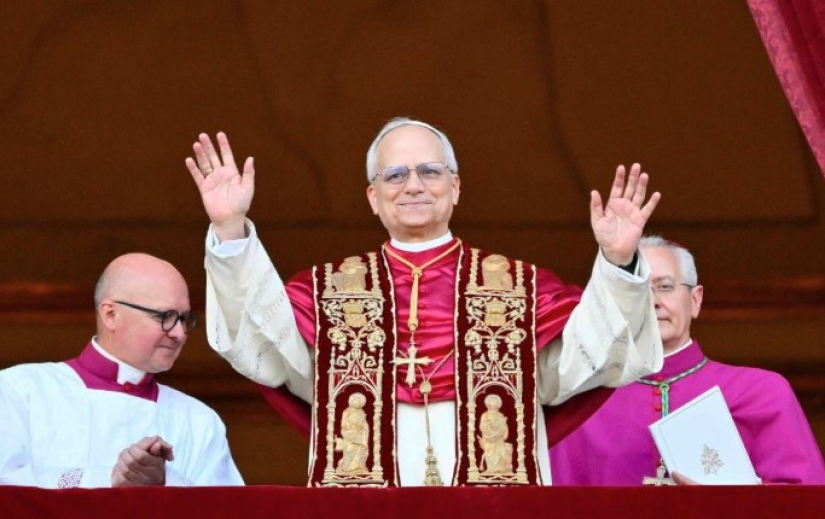 Following the death of Pope Francis, the first pontiff of Latin American origin, on April 2, 2025, global attention focused
on the question of his successor.
Following the death of Pope Francis, the first pontiff of Latin American origin, on April 2, 2025, global attention focused
on the question of his successor.
In accordance with Vatican protocol, 133 cardinals from 70 countries convened in a closed conclave and, following a secret ballot, elected Cardinal Robert Francis Prevost as the 267th Pope.
Formerly the head of the powerful Vatican office responsible for episcopal appointments, he became the first U.S.-born pontiff in history and was proclaimed Pope Leo XIV.
3. Gold Prices Reach a Historic High
 Gold futures for February delivery surged above
USD 4,300 per ounce, marking a 63 percent increase compared to the average
price of the fourth quarter of last year (USD 2,663).
Gold futures for February delivery surged above
USD 4,300 per ounce, marking a 63 percent increase compared to the average
price of the fourth quarter of last year (USD 2,663).
Silver prices also reached a historic high of USD 62 per ounce, more than double the amount compared to last year.
Analysts attribute the surge in precious metals prices to expectations that the U.S. Federal Reserve may cut its policy interest rate by a total of 75 basis points by year-end, a weakening U.S. dollar, weaker-than-expected labor market data, and a 1.5 percentage-point increase in unemployment recorded in August.
4. Climate Change Drives a Surge in Natural
Disasters Worldwide
 Natural disasters intensified across multiple
regions this year, with the frequency of extreme weather events rising
significantly.
Natural disasters intensified across multiple
regions this year, with the frequency of extreme weather events rising
significantly.
At the beginning of the year, massive wildfires in Los Angeles destroyed 16,000 buildings, with total damages estimated to be equivalent to the city’s three-year budget. In Europe, wildfires ravaged more than one million hectares of forest.
From mid-year through October, Southeast Asia was struck by the most severe natural disasters since the 2004 tsunami. Heavy rainfall triggered by multiple cyclones caused widespread flooding and landslides in India, Nepal, Indonesia, Thailand, Sri Lanka, Malaysia, and Vietnam.
More than 1,400 people lost their lives, hundreds remain missing, and millions were displaced. The disasters inflicted severe economic and environmental damage and triggered major humanitarian crises across the region.
5. India Becomes the World’s Third-Largest
Economy
 According to a study by the Lowy Institute,
India has surpassed Japan in economic capacity, ranking as the world’s
third-largest economy. The country’s economic growth rate currently stands at
6.9 percent.
According to a study by the Lowy Institute,
India has surpassed Japan in economic capacity, ranking as the world’s
third-largest economy. The country’s economic growth rate currently stands at
6.9 percent.
Investment banks, including Jefferies, JPMorgan, S&P Global Ratings, and Morgan Stanley, have projected that India’s economic expansion will continue. Earlier forecasts suggested that India would rank third globally in terms of GDP by 2027.
After overtaking China in population in 2023, India’s consumer market has continued to expand. Growth in middle- and high-income households is expected to push the number of affluent citizens to 100 million.
With an average age of just 28–29, well below the global average, and a vast labor force, India is projected to maintain sustained growth for decades. The country has set a strategic goal of joining the ranks of developed nations by 2047, transitioning from an agriculture-dominated economy to a leader in industry and high technology.
6. Ceasefire in the Gaza Strip
 Through the mediation of Egypt, Qatar, the
United States, and Türkiye, Israel and Hamas reached an agreement on October 9
to implement the first phase of the peace plan presented by U.S. President
Donald Trump. Consequently, the war in the Gaza Strip, which had lasted for
nearly two years, came to a halt on October 10.
Through the mediation of Egypt, Qatar, the
United States, and Türkiye, Israel and Hamas reached an agreement on October 9
to implement the first phase of the peace plan presented by U.S. President
Donald Trump. Consequently, the war in the Gaza Strip, which had lasted for
nearly two years, came to a halt on October 10.
Furthermore, in his speeches, the U.S. President stated, "I have stopped eight armed conflicts around the world within eight months and saved millions of lives." These included the armed conflicts that had broken out between Azerbaijan and Armenia, Cambodia-Thailand, Kosovo-Serbia, Congo-Rwanda, India-Pakistan, Egypt-Ethiopia, Israel-Iran, and Israel-Hamas.
However, following the ceasefire announcement, Thai Prime Minister Anutin Charnvirakul stated that Thailand would continue military operations against Cambodia until there is no longer a threat or damage to its territory and citizens.
7. First Female Prime Minister in Japanese
History
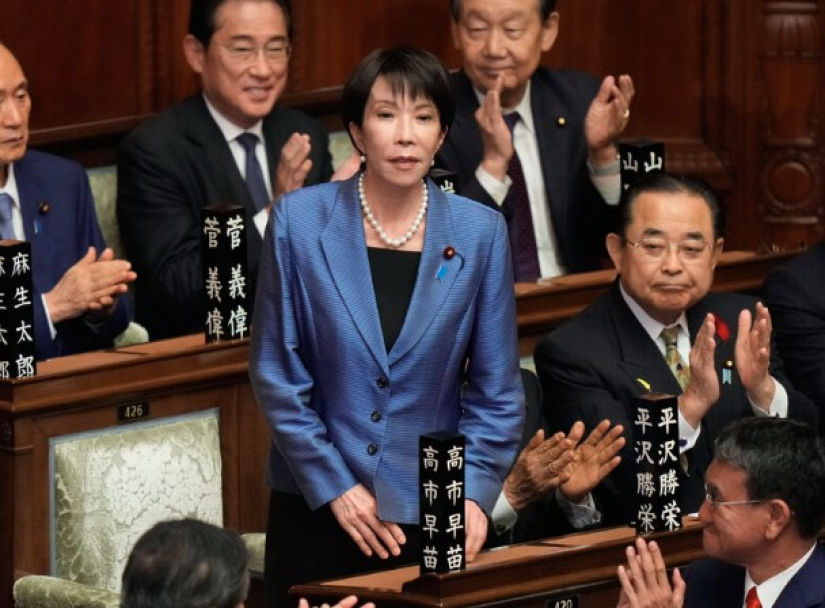 Sanae Takaichi, the new leader of the Liberal Democratic Party of Japan and a politician known for her conservative views, was
elected Prime Minister by a parliamentary vote on October 21. She has become
the first woman in the country's history to be appointed to this position.
Sanae Takaichi, the new leader of the Liberal Democratic Party of Japan and a politician known for her conservative views, was
elected Prime Minister by a parliamentary vote on October 21. She has become
the first woman in the country's history to be appointed to this position.
Additionally, in April 2025, the Constitutional Court of South Korea upheld the decision to impeach President Yoon Suk Yeol, removing him from office following his declaration of martial law in December 2024. An emergency election to choose his successor was held within 60 days, and Lee Jae-myung, the candidate from the Democratic Party, won and took office.
8. Australia Bans Social Media for Children
 In the Commonwealth of Australia, a law has
come into effect banning children under the age of 16 from accessing all major
platforms, including TikTok, Alphabet’s YouTube, and Meta’s Instagram and
Facebook.
In the Commonwealth of Australia, a law has
come into effect banning children under the age of 16 from accessing all major
platforms, including TikTok, Alphabet’s YouTube, and Meta’s Instagram and
Facebook.
As the first nation to implement such a ban on
a national scale, Australia will impose fines of up to AUD 49.5 million on
companies that violate the law. This ban aims to protect children from the
influence of cyberbullying, misinformation, and illegal content.
9. The AI Revolution Continues to Amaze
 This year, artificial intelligence transitioned
from a "technology of the future" into a practical tool for daily life,
surprising even the most experienced analysts. AI algorithms are now creating
content, diagnosing diseases, and operating autonomous vehicles.
This year, artificial intelligence transitioned
from a "technology of the future" into a practical tool for daily life,
surprising even the most experienced analysts. AI algorithms are now creating
content, diagnosing diseases, and operating autonomous vehicles.
AI previously made decisions within narrow
industry scopes. As it has now evolved into universal systems, these systems
are steering developments in economics, education, medicine, and the arts,
fundamentally changing our understanding of human roles. According to the
latest statistics, the AI market capacity grew by 38 percent in 2025, reaching
USD200 billion – a fivefold expansion over the last five years. Furthermore, it
is projected to reach USD 1.5 to USD 2 trillion by 2030.
As AI applications expand, the market valuation
and investment returns for major AI chip manufacturers are increasing
significantly. For instance, the American chipmaker Nvidia set a new record as
its market valuation reached USD 4 trillion for the first time.
10. Breakthroughs in Cancer Treatment and
Science
 For the scientific community, 2025 has been a
year filled with milestones and discoveries, as researchers pushed the
boundaries in space exploration, physics, biotechnology, and medicine.
For the scientific community, 2025 has been a
year filled with milestones and discoveries, as researchers pushed the
boundaries in space exploration, physics, biotechnology, and medicine.
Notably, a team of U.S. scientists and researchers successfully cured a rare genetic disease in a newborn using a treatment developed with CRISPR gene-editing technology. Additionally, a major advancement in personalized cancer treatment was achieved through the development of a new combination therapy specifically targeting rare types of ovarian cancer.
Additionally, a discovery made in Suffolk, England, confirmed that Neanderthals were able to make fire 400,000 years ago, pushing this timeline back by 50,000 years.
Moreover, the next-generation James Webb Space
Telescope has captured images of nebulae with unprecedented clarity and
discovered MoM-z14, the most distant galaxy known, formed just 280 million
years after the Big Bang.