Ulaanbaatar





Mongolia–South Korea Relations at a New Stage, Officials Affirm at Ulaanbaatar Forum
Politics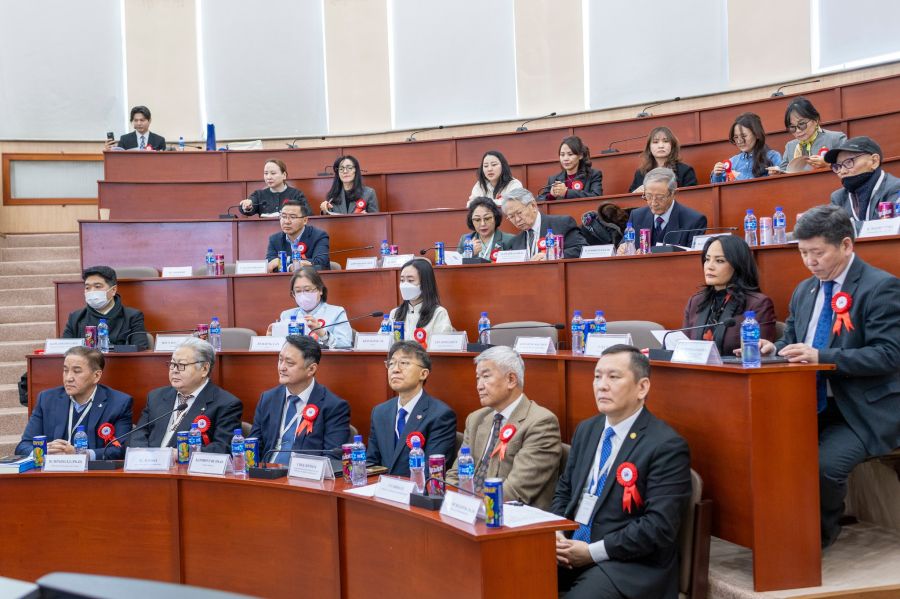
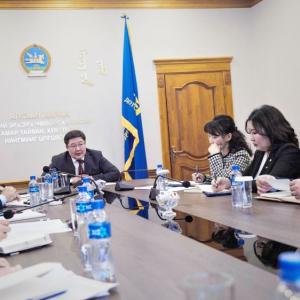
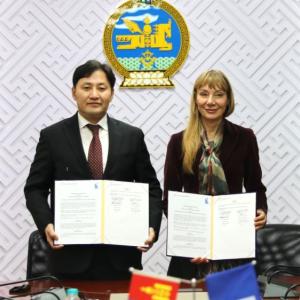
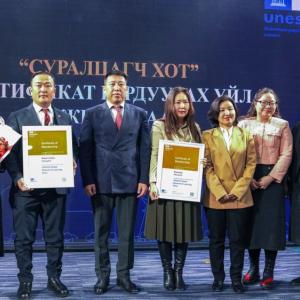
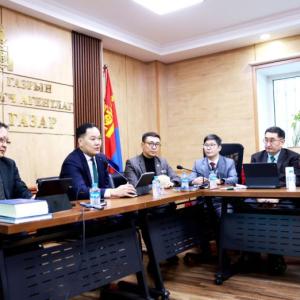
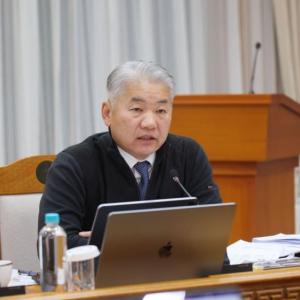
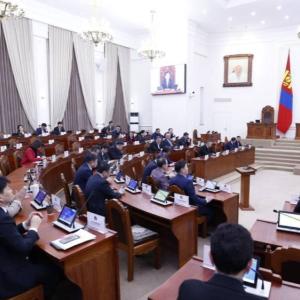
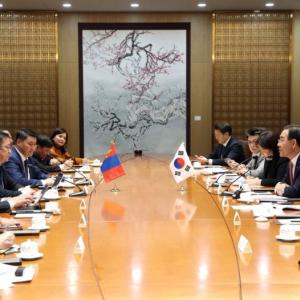
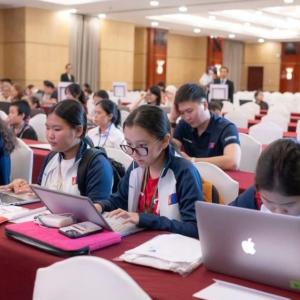
Ulaanbaatar, December 25, 2025 /MONTSAME/. An academic forum titled “Mongolia–the Republic of Korea Relations at a New Level and Future Prospects” was held in Ulaanbaatar on December 24, 2025, in commemoration of the 35th anniversary of the establishment of diplomatic relations between the two countries. The event was organized by the Department of Asian Studies, Korean Studies Division of the School of Science at the National University of Mongolia.

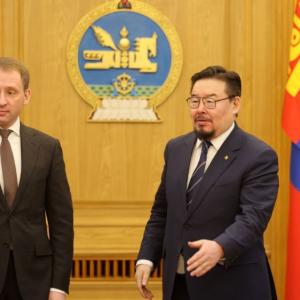
At the opening ceremony, Advisor Ganbold Gonchig read a message from Deputy Prime Minister Gankhuyag Khassuuri, which stated: “The Government of Mongolia regards the Republic of Korea as our ‘third neighbor’ and trusted partner, and has consistently pursued a policy of expanding bilateral relations and cooperation in all fields. Our relations, based on shared values such as mutual trust, democracy, market economy, human rights, and the rule of law, have reached the level of a Strategic Partnership and entered a new stage of cooperation. The Republic of Korea has become Mongolia’s fifth-largest trading partner and tenth-largest investor, clearly demonstrating the scale and tangible results of our relations. Our cooperation is successfully developing in the economy, education, culture, humanitarian affairs, infrastructure, environment, and tourism sectors, as well as expanding in new areas such as climate change adaptation, disaster risk reduction, environmental protection and restoration, urban development planning, energy, and public transport.”

Addressing the forum, Ambassador of the Republic of Korea to Mongolia, Choi Jin-won, said: “Geographical proximity, along with our historical ties and similarities in language and culture, has laid the foundation for exceptionally close and friendly relations between our peoples.
Over the past 35 years, continuous people-to-people exchanges have become a
pillar of our bilateral friendly relations. We must further strengthen our
friendly relations, particularly by actively expanding cooperation in tourism,
healthcare, business, and employment.
I believe the time has come to identify and jointly implement major projects
that can serve as strategic symbols of Korea–Mongolia cooperation. Active
cooperation is underway in multiple areas, including negotiations on an
economic partnership agreement between the two countries, as well as
infrastructure and afforestation. Our Embassy will make every effort to further
develop the friendly relations between our two countries.”

Rector of the National University of Mongolia, Ochirkhuyag Bayanjargal, emphasized: “Education and science have always held a special place in Mongolia–Korea relations, and the National University of Mongolia is one of the clearest examples of this cooperation.
The establishment of the Department of Korean Language and Korean Studies at
NUM in 1991 laid the foundation for training professional Korean studies
specialists in Mongolia.
Today, our university cooperates with 47 Korean universities and educational
institutions.
The NUM King Sejong Institute is an example of bilateral education and cultural
cooperation being strengthened at the institutional level. Projects supported
by Korean institutions such as KOICA and ARC are making valuable contributions
to strengthening human resource capacity, supporting young researchers, and
expanding policy and research exchanges.
Since our relations were elevated to a Strategic Partnership in 2021,
cooperation has gained new substance and broader scope, producing tangible
results not only in politics and the economy, but also in education, science,
culture, and humanitarian affairs.”

Diplomat Lombo Janchivdorj, Chairman of the Baekdu
Mountain Society and Advisor at the Institute of International Studies of the
Mongolian Academy of Sciences, recalled:
“When
diplomatic relations were established in 1990, and Mongolia opened its Embassy
in Seoul in 1991, I served as the first acting chargé d’affaires. Thirty-five
years later, I am proud to have witnessed how our relations have expanded in
all areas. Today, more than 60,000 Mongolian citizens live and work in the
Republic of Korea. Our trade has reached USD 520 million, and Korean investment
has risen into Mongolia’s top five sources of foreign investment.
More than 20,000 Mongolian students have studied in Korean universities, and
about 8,000 are currently studying there. Over the past 35 years, more than
300,000 Mongolians have participated in Korea’s development. By combining
Mongolia’s natural resources with Korea’s advanced technologies, we have strong
potential to expand mutually beneficial cooperation at the regional level.”
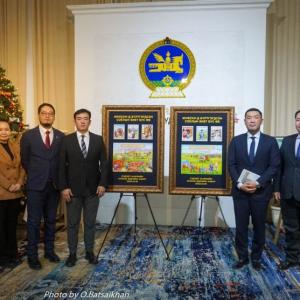
During the forum, the book Mongolia–Korea 1990-2025, written by J. Lombo and his son Khash-Erdene, was officially launched.